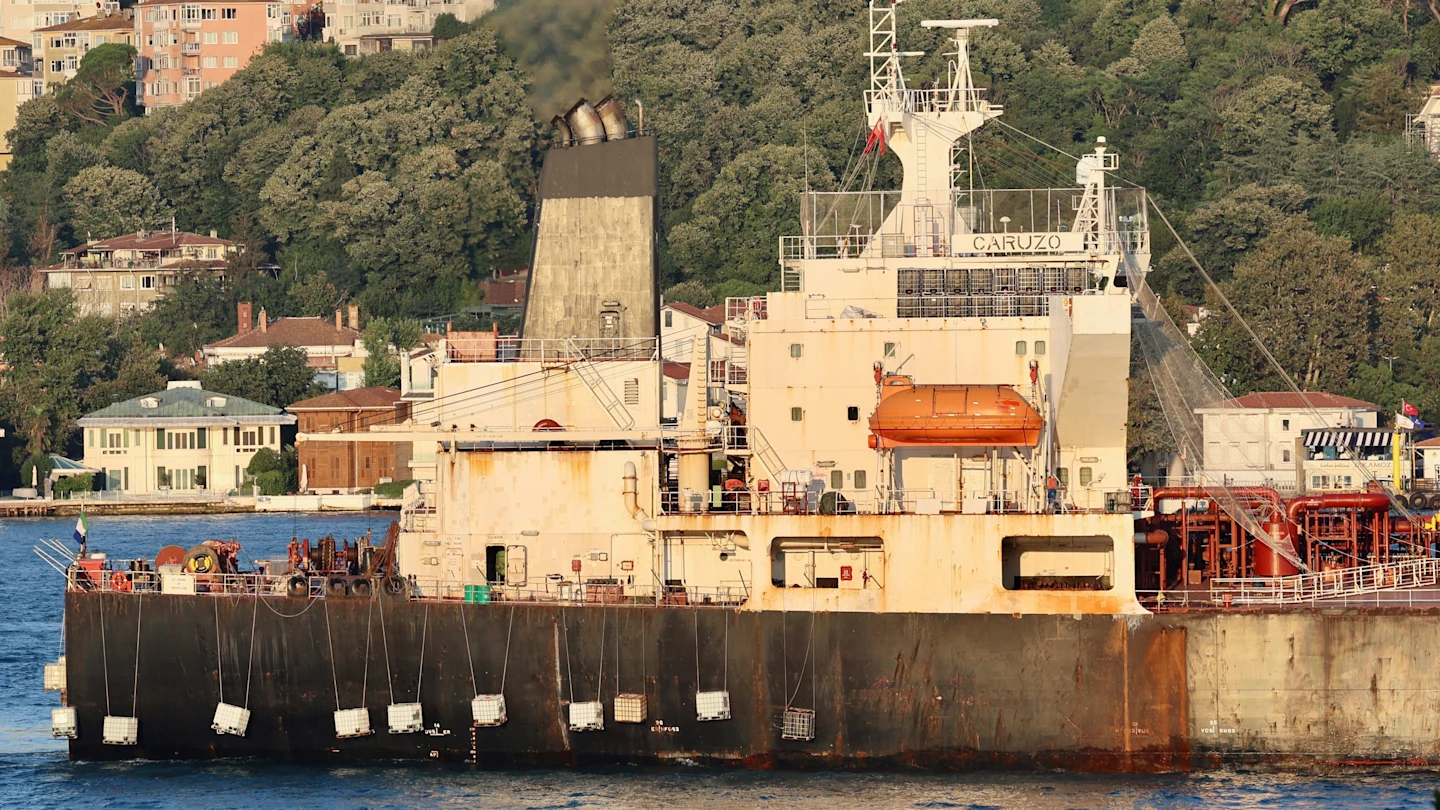
The ongoing naval conflict in the Black Sea has driven a rapid evolution in improvised defensive technologies. Russian-linked commercial vessels, particularly tankers operating within the shadow fleet, are increasingly adopting improvised armour configurations previously seen only on land forces. Recent observations of the sanctioned oil tanker Caruzo passing through the Bosphorus reveal extensive structural modifications designed to mitigate asymmetric aerial and surface threats.
Naval architecture on these civilian vessels now routinely features layered physical barriers. As reported by The Financial Times, the hull and superstructure of targeted tankers are being retrofitted with heavy-duty anti-drone netting, elevated metal standoff cages, and perimeter water tanks. These measures create a perimeter defence intended to detonate incoming warheads prior to hull penetration, with water barriers absorbing kinetic energy and blast pressure. According to recent coverage, crew accommodation modules and navigation bridges are being completely enclosed in protective netting to shield personnel from first-person-view (FPV) loitering munitions.
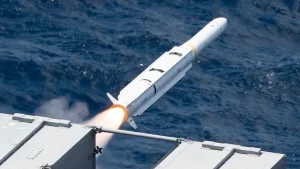
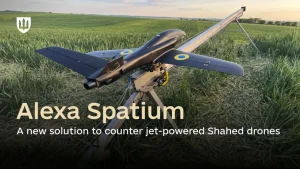
This defensive push comes as Ukraine expands its asymmetric strike operations across the Sea of Azov and the Black Sea, leveraging a combination of uncrewed surface vessels (USVs), jet-powered aerial drones, and anti-ship missile systems. Since July 2026, targeted strikes have hit over 218 Russian-linked vessels, aiming to sever maritime fuel logistics and impact export economies. The scope of operations extends to major naval infrastructure, including multi-domain strikes against naval base assets, air defence emplacements, and harbour facilities at Novorossiysk.
In response, strategic ports have transformed their force protection posture. Satellite analysis confirms that permanent harbour defences at Novorossiysk now combine large netted frames with floating boom barriers and submerged barges across channel approaches. While these passive physical countermeasures add friction to drone targeting mechanisms, they also reflect the shifting balance of maritime power, where high-cost commercial and naval assets must constantly adapt to low-cost uncrewed strike vectors.