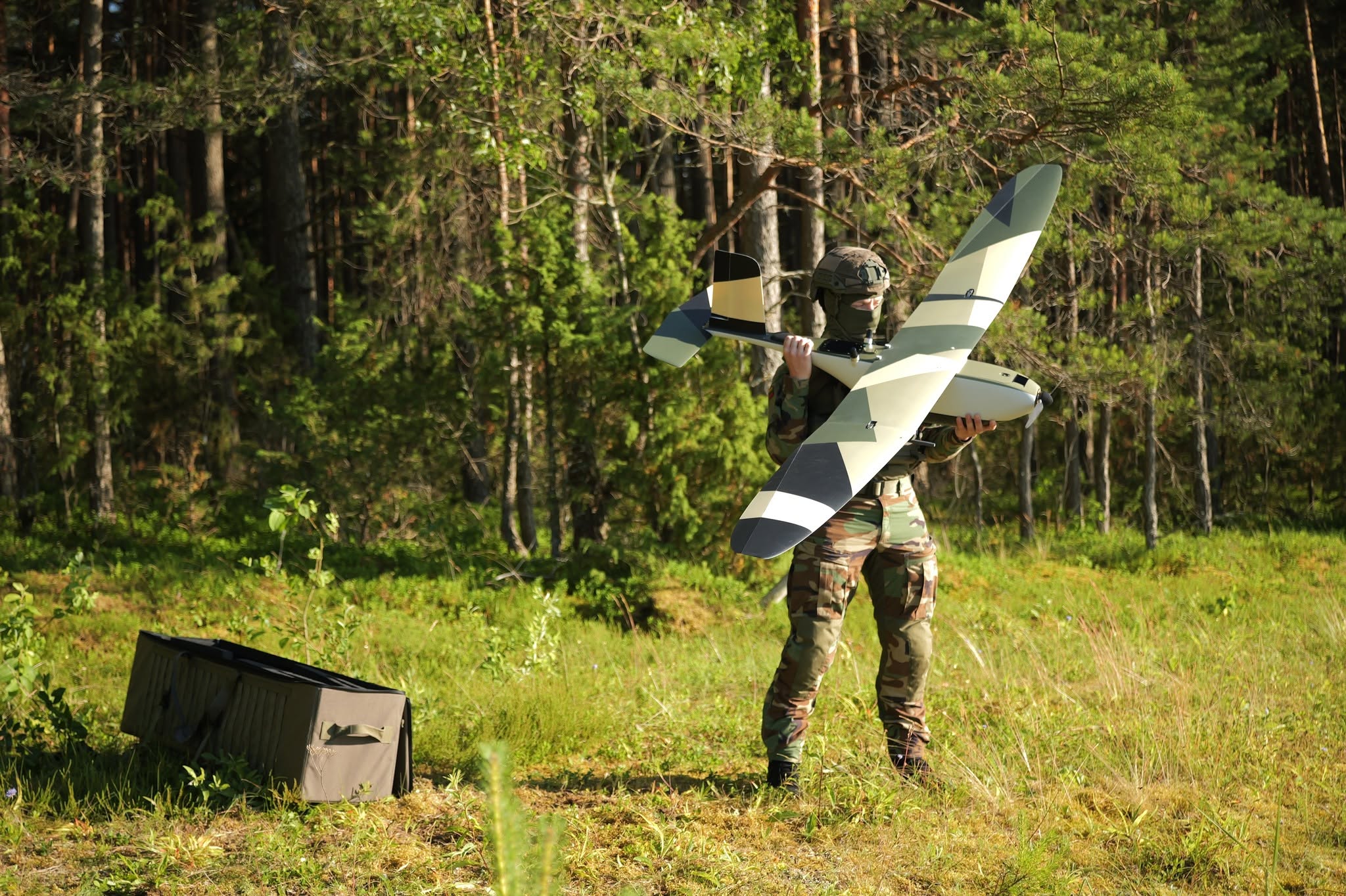
Lithuanian defense tech firm Unmanned Defense Systems has rolled out key upgrades to its Forecaster intelligence, surveillance, target acquisition, and reconnaissance (ISTAR) platform, specifically designed to address the growing risk of first-person-view (FPV) aerial interceptors hunting surveillance drones across Eastern Europe.
According to Unmanned Defense Systems (UDS), these improvements are already built into every new unit coming off the assembly line, driven directly by real-world frontline feedback.
The flagship feature of the update is an integrated radio-frequency (RF) drone detection system. By constantly scanning the RF spectrum for nearby unmanned aircraft, the software alerts operators to incoming aerial threats before they close in and suggests tactical maneuvers to evade them. As FPV interceptors increasingly replace traditional ground-based air defenses as the primary threat to scout drones, this feature elevates aerial survivability to a top operational priority.
In addition to defensive sensing, UDS has expanded remote control capabilities using its proprietary SwarmC2 software layer. Operators can now pilot Forecaster missions securely from virtually anywhere in the world. By decoupling ground handling crew tasks at the physical launch site from full flight command, the system significantly reduces crew exposure to enemy counter-battery and tracking strikes.
The Forecaster platform operates within a wider battlefield ecosystem designed by UDS. It pairs seamlessly with AVENGER 5, the company’s precision loitering munition, alongside standard battlefield management tools such as Tactical Assault Kit (TAK) and SitaWare. UDS validated this full target-to-strike chain in operational conditions during the Lithuanian Armed Forces exercise Karo šauklys 2026.
Founded in May 2022, UDS supplies hardware to the Lithuanian military and police forces, while also delivering its qualified BLASTER 4 FPV drones directly to Ukrainian frontline units.
The company stresses that its manufacturing model relies on rolling improvements rather than periodic hardware revamps. Every new production batch directly incorporates engineering updates standardizing both RF threat detection and long-range remote mission management for immediate deployment.