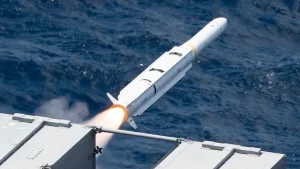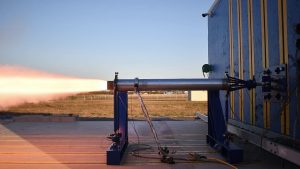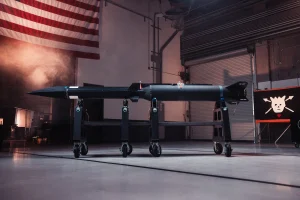
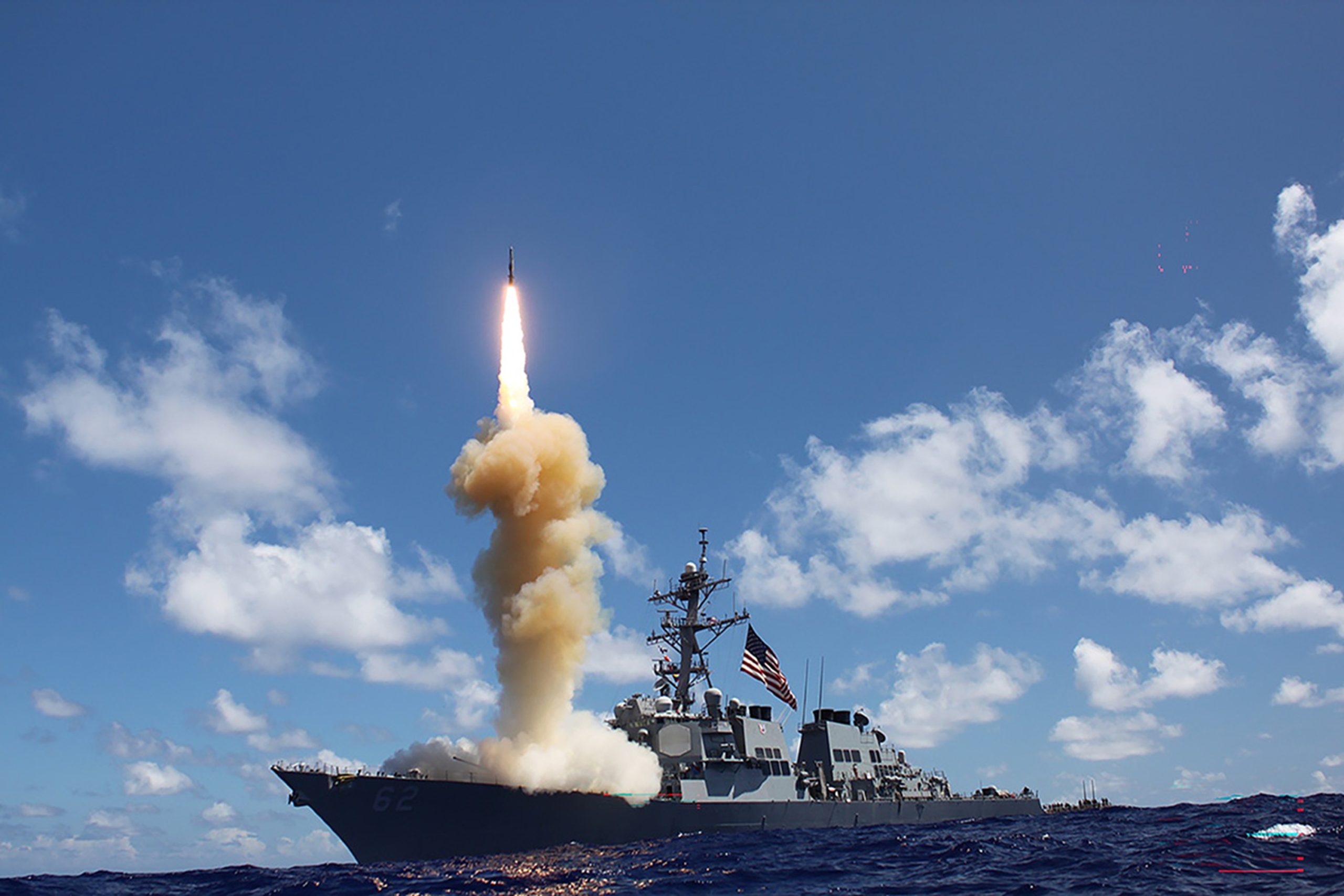
Long-term framework agreements targeting crucial subsystem manufacturing aim to stabilize the industrial base supporting ship-launched anti-ballistic missile inventory. The Pentagon has signed seven-year arrangements with Boeing and RTX to scale up the production of avionics and ejector assemblies used in the Navy’s Standard Missile-3 (SM-3) system. These components feed directly into both the SM-3 Block IB and the advanced Block IIA variants, which operate in conjunction with the Aegis Ballistic Missile Defense System to intercept exo-atmospheric targets.
The seven-year structure enables advance manufacturing activities ahead of finalized contracts while multiyear procurement details are negotiated. As reported in an official Pentagon release, Under Secretary of War for Acquisition and Sustainment Michael P. Duffey noted that the operational goal is to stabilize supply lines and expand production capacity to meet military demand. The arrangement aligns with earlier subcontractor agreements, such as an April commitment aimed at tripling PAC-3 seeker production, and follows a recent $745 million Missile Defense Agency contract awarded to Raytheon for complete SM-3 Block IIA assembly for U.S. and Japanese forces.
Accelerated component sourcing addresses significant stockpile expenditures following operational SM-3 deployments, including defending against Iranian strikes in early 2024 and usage in Operation Epic Fury. With independent analysis from the Center for Strategic and International Studies estimating wartime expenditures between 130 and 250 interceptors from an inventory that stood at 414 units in late 2025, replenishment is expected to take several years. Boeing Precision Engagement Systems Vice President Bob Ciesla emphasized that the commitment provides a clear manufacturing baseline required to support layered missile defense architectures.