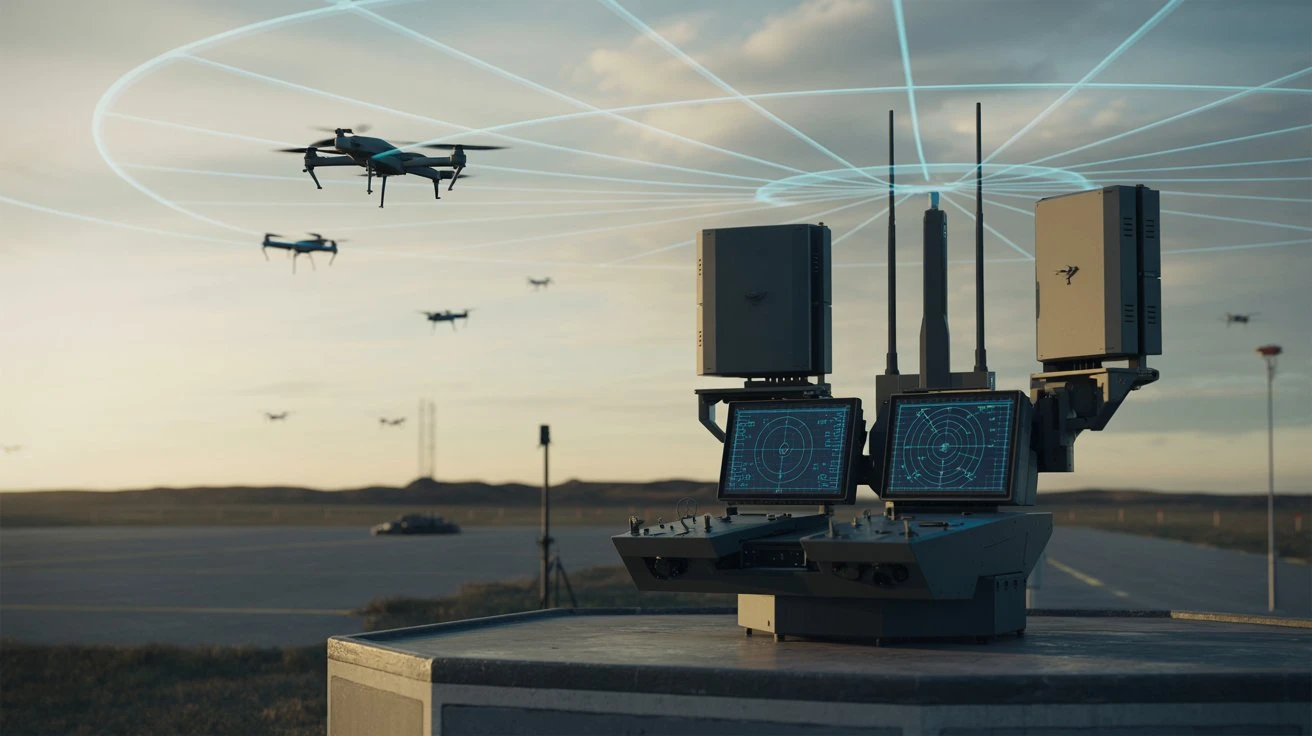
The Pentagon is broadening access to its counter-unmanned aerial system (C-UAS) marketplace, an online catalog designed to allow the military, domestic law enforcement, and international allies to purchase validated counter-drone technology much like an e-commerce platform.
Joint Interagency Task Force 401 (JIATF-401), the U.S. Department of Defense’s C-UAS coordination hub, announced the expansion on August 3 as part of an initiative to accelerate how vetted equipment reaches the field. According to defense officials, the latest upgrades allow authorized buyers to search systems by operational needs, examine verified performance data, and finalize purchases through a unified process rather than navigating fragmented procurement channels.
The platform was developed by Kaizen, a four-year-old software firm that received a $15 million contract from JIATF-401 in early May to prototype the system. Kaizen CEO Nikhil Reddy stated that his team built and deployed the system from scratch in under nine weeks, launching it approximately two weeks prior to the August announcement. JIATF-401 had previously introduced an initial iteration of the marketplace in late February under a separate contract as a foundational baseline.
Technologically, the platform relies on two core products from Kaizen: Taproot, a repository of compliance-focused software components for handling applications, permits, and reporting; and Blacksmith, an artificial intelligence tool that helps users configure those components to meet specific procurement goals. Future updates planned by JIATF-401 will allow users to input threat profiles, budget constraints, operational readiness, and environmental conditions to receive tailored recommendations across the counter-drone kill chain.
Several leading defense technology firms—including Anduril, Smartshooter, Droneshield, and Aerovironment—are actively listing products on the site. Companies submit technical specifications, maintenance documentation, and compliance records, which are reviewed and approved by JIATF-401 administrators before going live. User access is structured in tiers based on export-control authorizations and security clearance levels.
While procurement volume is increasing, the rollout remains gradual. Task force spokesperson Lt. Col. Adam Scher noted that marketplace purchases grew from $13 million in April to $21 million by early August. Kaizen’s leadership emphasized that the system is currently undergoing a controlled rollout to ensure ordering and adjudication workflows function seamlessly before a full-scale launch.
U.S. Army leadership, including Army Secretary Dan Driscoll, has championed the online venue as a modern commercial solution to legacy acquisition bottlenecks that have historically delayed critical counter-drone capabilities. The effort has gained urgency during the conflict with Iran, where low-cost strike drones have highlighted a severe cost imbalance compared to expensive U.S. air defense interceptors.
Beyond domestic defense procurement, the marketplace directly supports the U.S. Army’s Foreign Military Sales (FMS) Fast Lane initiative. Under this program, vendors submit products that JIATF-401 and the Deputy Assistant Secretary of the Army for Defense Exports and Cooperation evaluate to pre-clear for foreign military sales. Confirmed international partners participating in the program include Australia, Poland, South Korea, the United Kingdom, and Romania. Additionally, state and local law enforcement entities in the United States are currently being onboarded.
Highlighting the scope of the challenge, JIATF-401 Director Brig. Gen. Matt Ross observed that uncrewed aerial systems represent a defining threat of the current era, pointing to the risk small drones pose to critical infrastructure and military assets as the driving force behind sharing technologies and operational standards with allied nations.