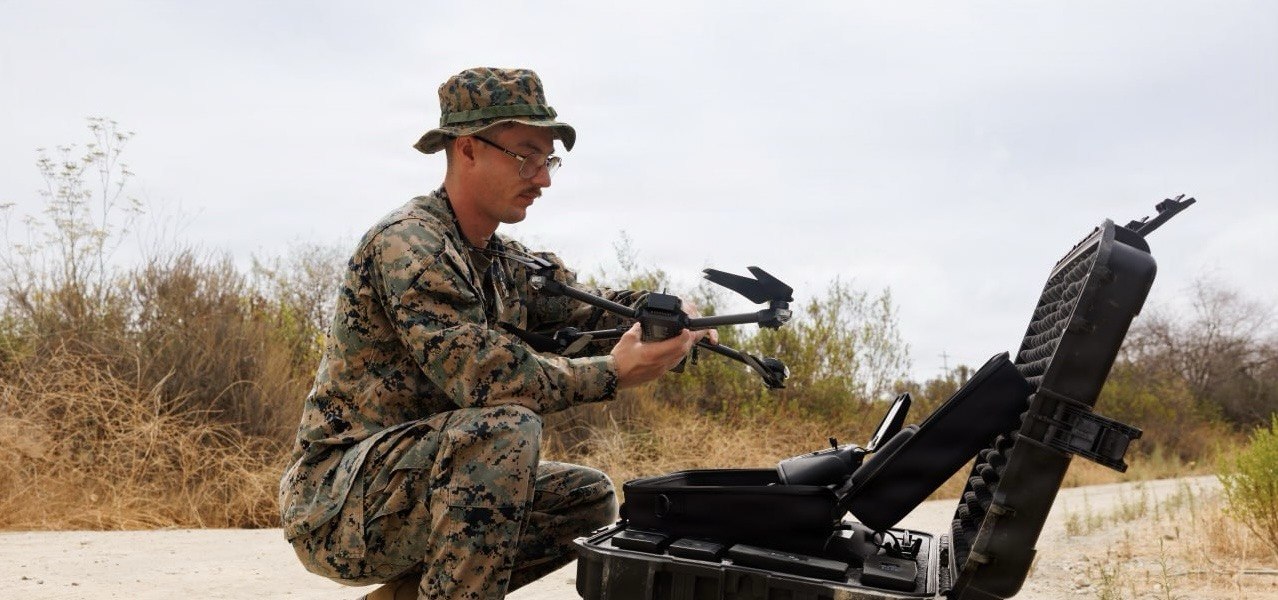
To support expanding aerial imagery requirements across installation management and strategic communication, Marine Corps Installations Command has certified sUAS operational capabilities and established the Free Military Occupational Specialty 8623 for Small Unmanned Aircraft Systems Operators. The creation of this formal specialty enables both commissioned and enlisted personnel to undergo standardized qualification, equipping Marines with technical skills to deploy small, low-cost unmanned aerial platforms for non-combat installation functions.
Integration of these platforms addresses operational constraints inherent to ground-based visual documentation, as reported by defense media portal DVIDS. Under training administered by Training and Logistics Support Activity West at Marine Corps Base Camp Pendleton, Marines complete a five-day curriculum focused on Group 1 systems such as the SKYDIO X2D and Skyraider quadcopters. Visual Information Officer Chief Warrant Officer 4 Jared Padula noted that deploying drone platforms provides commanders with directed joint-interest visual information, optimizing situational awareness and decision-making processes during complex operational scenarios.
Beyond communication strategy and visual information gathering, sUAS operators provide aerial support for a broad range of base missions, including emergency response, battle damage assessments, and environmental monitoring. During a July 2026 wildfire that burned over 1,000 acres at Camp Pendleton, aerial platforms enabled real-time site surveys without placing personnel in hazardous impact areas. MCIWEST Aviation Operations Director Jeff Meeker emphasized that while operational forces focus on tactical deployment, installation applications extend to security, infrastructure inspection, and hazard mitigation, establishing a standardized drone capability across shore support infrastructure.