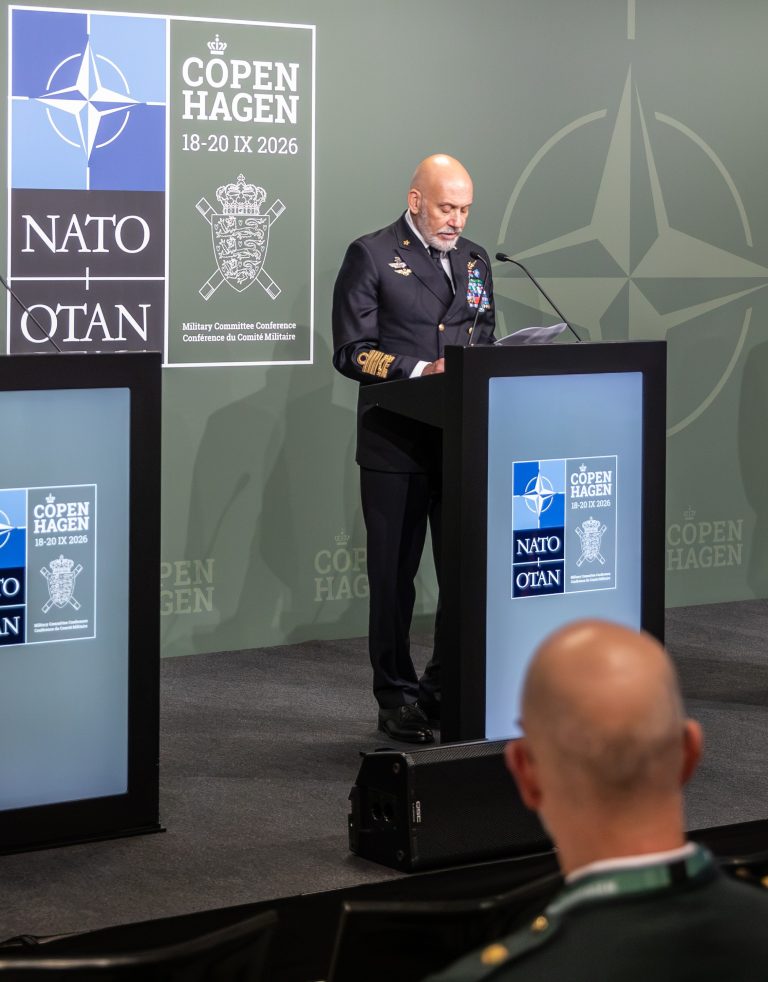
An excerpt from Minister for Defence Readiness and Industry Luke Pollard MP’s speech at DVD 2026.
…Now land is an essential domain, integral to the government’s mission to re-arm and reindustrialise the UK and it’s this domain that is one of the cornerstones of our deterrence as a nation.
And as an industrial sector, the land domain not only underpins the fighting power and lethality of the British Army, but also reinforces the argument that defence is an engine for growth.
Now, although I’m now supposed to say reindustrialisation, every time I say engine for growth due to the swapping Prime Ministers, the great advantage of that is both are true: that if we spend an increasing defence budget more with British companies, we create more good, decent jobs at home. We increase our industrial capacity, which increases our deterrent ability, as well as getting the latest kit and equipment into the hands of our warfighters.
And that’s why the land domain is so important, because this is not just a factory based in one part of the UK. The companies that work in the land domain make huge contributions to every single region of our country and the supply chain furthermore, in every single part. It is a success story that we don’t talk about enough, and it is one that is integral to defence’s contribution to reindustrialising the country. And that is an essential part of delivering on the increased defence spending that the Treasury is making available for defence.
And we can see that whether that’s from Merthyr and Oakdale, Telford, Stockport and Newcastle and across the nationwide network of suppliers, not just big companies but increasingly more SMEs getting involved in defence supply chain. This is a good thing, and this exhibition here allows us to talk about the ingenuity, the technology being brought forward and the people behind it, and that essential partnership between the public sector and the private sector that we need more of.
And as we reform defence procurement to be faster, because I think it’s fair to say that everyone in this room, regardless of what kind of clothing you are wearing today, will know that defence procurement is not as fast as we would all like it to be. We’re speeding it up. And some of the examples I’m going to talk about today are good examples of how we’re accelerating procurements, so we can get more kit and equipment faster and deliver greater value for that increased defence spending.
Now, I’m really grateful for the progress that we have collectively made as an industry and as a government over the past two years. As a government, we’ve delivered the biggest sustained increase in defence spending since the Cold War, and the land warfare sector here has been a recipient of that increased defence spending, and it has a bright future ahead.
Now, our Defence Investment Plan laid out £298 billion worth of spending over the next four years, and we’ve secured a portfolio of land warfare modernisation programs within that Defence Investment Plan that will not only invest in British industry, but also give the British Army the kit and equipment they need, and provide the opportunity possible for those platforms to be exportable as well, working with our allies at the same time.
Now, that model and that funding is vital if we’re going to deliver the Recce Strike model that has been set out so clearly by CGS. That’s built around better targeting, better battlefield surveillance and more lethal long range fire, an increase in lethality of our British forces, to give us a generational upgrade in the abilities of the British Army. That’s not only about long range fire, but if you took long range fire as the example of the upgrades over the next four years, we’re investing £190 million in short range ballistic missiles, £400 million in inexpensive one-way attack drones and weapons, and £220 million in Project Nyx to build an advanced armed autonomous drones to fly alongside our Apache helicopters.
That’s about improving the lethality and delivering against CGS’s 20:40:40 strategy (N.B. Deliberate move away from platform-centric to a network-centric approach warfare and seeks to maximise lethality by layering ‘Reconnaissance Strike’ combat systems of crewed / uncrewed sensors and effectors), which has been baked into the Defence Investment Plan. Now, that will be collectively a higher resolution picture of the battlefield and increase the effectiveness and speed of our targeting.
Now we’re investing a combined £4.4 billion to take forward Boxer, Ajax and Challenger programmes over the next four years and £370 million to roll out Project Asgard, which has proven itself as the brains behind the Recce Strike concept. And that has certainly worked in Estonia, we’re rolling it out to more parts of the British Army as well. Now enabling our forward land force to fuse existing capabilities such as armoured vehicles with drones and other new capabilities, is vital to deliver that new type of deterrence that we need in the 21st century.
These programmes sit alongside our new multi-million pound investment in new medium helicopters from Leonardo in Yeovil, uncrewed ground vehicles with more announcements to come in that area, counter-drone technologies and a successor to the venerable Land Rover…
So much of the stuff that we buy that I sign off as the Minister comes from single source procurement. That’s the right thing when we’re dealing with high end procurements, advanced British technologies. But for a Land Rover replacement, having that competitive edge with companies far and wide providing options for defence to choose from, I think shows a market working well and we’re making progress against that.
Now look, over the next four years we’re investing more than £19 billion in land warfare capabilities, as well as £11 billion in weapons and ammunition. So, when we talk about as a politician what we inherited, hollowed out and underfunded forces, we inherited brilliant people, a structure that has at its heart a real desire to renew and rearm. And that is what this increased defence funding helps enable: new technologies being brought forward.
And today, I’m delighted to unveil progress with three of our latest investments in that are vital components of Recce Strike.
First, to equip our soldiers with highly mobile ISR capabilities that will give them round the battlefield tactical awareness. We’ve signed contracts with three British SMEs worth a combined £16 million for more than a thousand small ISR drones.
Second, to replace the ageing Watchkeeper system, I can today confirm that we have placed a contract with Tekever to bring twenty four of their AR5 drones into service by 2029. Together, these systems give us a ‘David and Goliath’ style mix of spy drones, equipping the Army with small, agile, rapidly deployable systems for the frontline alongside sustained high fidelity intelligence from the AR5 over longer range and durations.
And thirdly, I can also announce today that we have awarded contracts to MBDA and Thales to explore how we can develop the tech behind a new beyond-line-of-sight anti-armour weapon system, a capability that the British Army has not had since Swingfire, left service over 30 years ago, a capability that can drastically improve the ability of our land forces to strike and survive on the modern battlefield.
Now, these are just three procurements that will not only demonstrate how we’re evolving operationally in response to the lessons from Ukraine, but they’re programmes that demonstrate how we have reformed our procurement processes in response to what we’ve learned from our friends in Ukraine…
Now, I make no apologies for directing more of that rising defence budget at British-based firms and UK workers, and on the face of it, that could appear protectionist. But it’s not. It’s a strategic decision that we have taken, and a departure from previous decisions taken by previous governments. Because when taxpayers see both a security and an economic dividend from increased spending on defence, it helps us to increase the size, not just of the public coalition in support of that investment, it also increases our ability to defend the nation as well…
Now, the government’s guiding mantra are backing UK firms pays us back four times over: in military strength, in industrial strength, in economic growth and in public support for defence. It takes us closer to achieving our objectives of doubling the Army’s fighting power by 2027, tripling it by 2030 and growing it tenfold by 2035. That’s not just the government’s story. That’s your story as well. And across the British Army, procurement, and industry, it’s one that if we tell, well, we’ll deliver not only added effect but greater support for defence spending…
Source: gov.uk