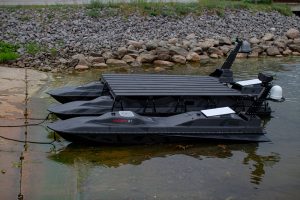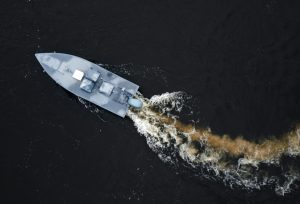
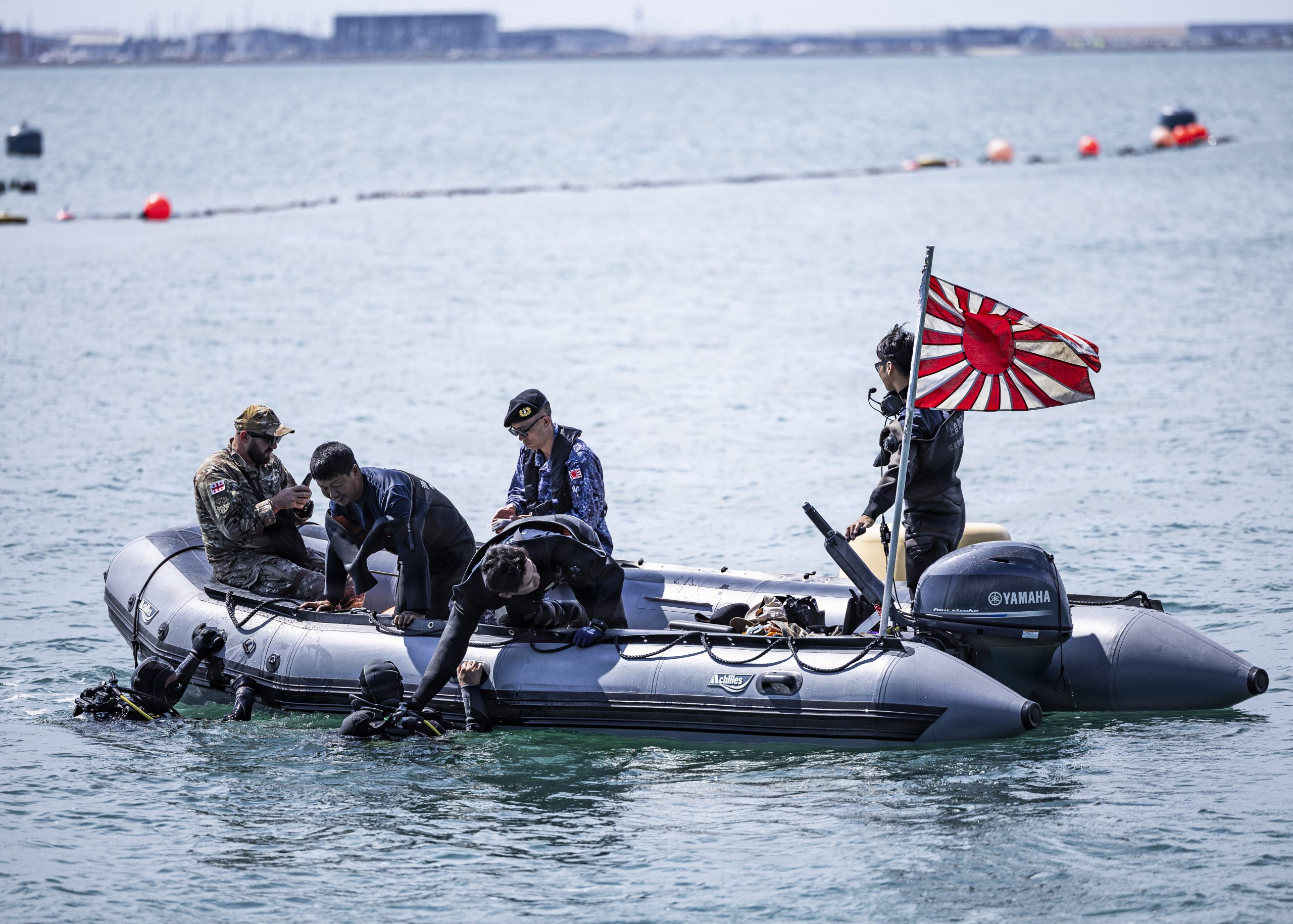
Allied and partner naval forces evaluated the integration of autonomous and unmanned underwater vehicles during exercise Sea Breeze 26-2, conducted from July 12 to 24 in the coastal waters of Portland and the English Channel. The deployment focused on combining Unmanned Underwater Vehicles with Explosive Ordnance Disposal teams to conduct close-proximity mine countermeasures while enhancing tactical interoperability across participating maritime units.
As reported by DVIDS, deploying robotic systems for subsurface reconnaissance allows forces to scout unmapped waters prior to committing crewed vessels or divers, shielding high-value warships and personnel from multi-sensor mines triggered by pressure, magnetic, or acoustic signatures. Lt. Alexander Holt of U.S. Navy Mine Countermeasures Group 6 noted that substituting traditional divers with integrated unmanned systems mitigates physical risks associated with low visibility, decompression sickness, and volatile fuses during mine location missions.
The exercise applied a phased standard operating procedure to standardize standard detection, identification, and clearance workflows among multinational forces. Bjorn, a Swedish explosive technician, stated that structured procedures serve as essential operational boundaries to maintain effective field decision-making beyond individual experience. Incorporating autonomous assets into command-and-control networks serves as a force multiplier, accelerating decision cycles while keeping personnel at a safe standoff distance. Commander Alasdair Magill of the British Royal Navy emphasized that the exercise unifies individual units into a cohesive multinational force operating in a dynamic environment, with the 2026 iteration involving forces from 18 nations and NATO Allied Maritime Command.