Japanese defense contractors are expanding their unmanned aerial vehicle portfolios in response to government initiatives positioning artificial intelligence and autonomous systems at the center of Japan’s defense strategy. The policy shift, detailed in the 2026 defense white paper, calls for adopting private-sector technology to establish new operational concepts and reinforce the national defense industrial base.
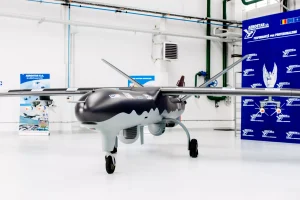
Industrial leaders are leveraging existing aerospace and defense infrastructure to shorten development timelines. Mitsubishi Heavy Industries developed a mass-production prototype of an interceptor drone engineered to defeat incoming attack UAVs. President Eisaku Ito noted that cross-divisional collaboration enabled the prototype’s completion within three months, adding that the company plans to produce various drone models in small batches with iterative specification updates based on operational feedback, as reported by The Straits Times.
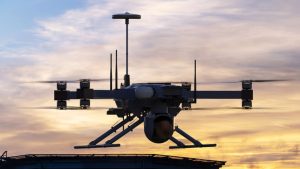
Concurrently, Kawasaki Heavy Industries is collaborating with Airbus to integrate its proprietary submarine-detection and monitoring systems onto an unmanned platform, with plans to propose the capability to the Japan Maritime Self-Defense Force. Japanese technology firms and commercial startups, including Tokyo-based Terra Drone and Rakuten Group, are also entering the defense sector. Rakuten’s partnership with a German defense startup to support Ministry of Defense procurements highlights both the increasing involvement of commercial enterprises and the ongoing domestic debate regarding corporate participation in defense manufacturing.