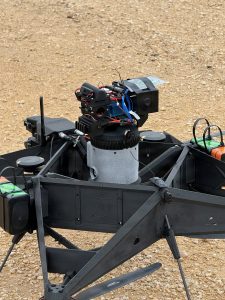
The U.S. Army has awarded production contracts totaling $192 million to Palantir Technologies and Anduril Industries to transition the Tactical Intelligence Targeting Access Node (TITAN) program into its production phase.
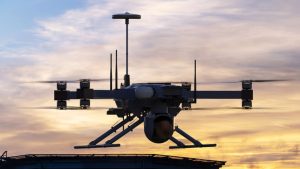
The TITAN platform is designed to collect, synthesize, and disseminate intelligence from ground, air, and space-based joint and national assets. Palantir received $127 million to serve as the prime contractor leading overall production, working alongside key industry partners including L3Harris Technologies, Sierra Nevada Corporation, Strategic Technology Consulting, and World Wide Technology. Anduril was awarded $65 million to develop ruggedized vehicle-mounted hardware and integrate power and operator subsystems. This is stated in the U.S. Army press release.
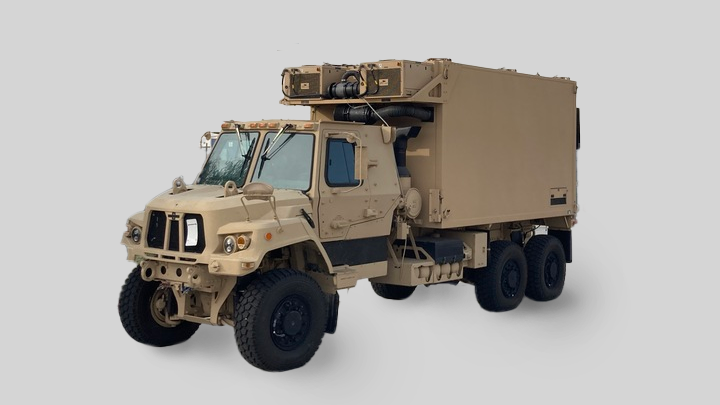
The agreements cover the procurement and integration of eight systems scheduled for delivery across the next 18 months, comprising four advanced and four basic variants. The basic variant is configured as a division-level asset mounted on the Joint Light Tactical Vehicle and the Infantry Squad Vehicle-Utility. The advanced variant functions as a corps-level, military intelligence brigade theater-level, and multi-domain command asset mounted on the Family of Medium Tactical Vehicles.
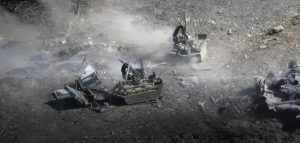
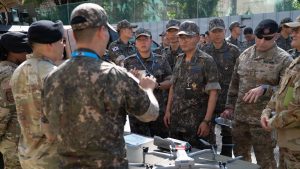
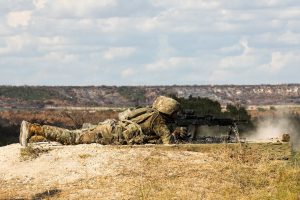
Following years of prototyping and testing in diverse operational environments such as the Pacific and Europe, the Army incorporated feedback from soldiers—including addressing climate-related challenges such as humidity through rigorous environmental engineering. Col. Jonathan Lipscomb, the Army’s project manager for intelligence systems and analytics, noted that the system enhances target recognition speed and geolocation from multiple sensors while reducing sensor-to-shooter timelines through automated target nominations.
In addition to the vehicle-mounted configurations, the service is planning a vehicle-agnostic version that can be housed in a case, loaded into a vehicle, or deployed inside a building. This capability allows operators in Denied, Degraded, Intermittent, and Limited environments without cloud access to ingest local sensor data directly.