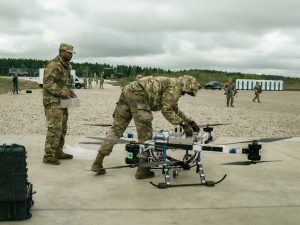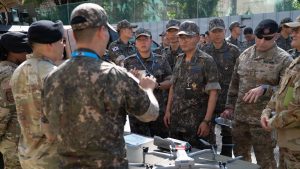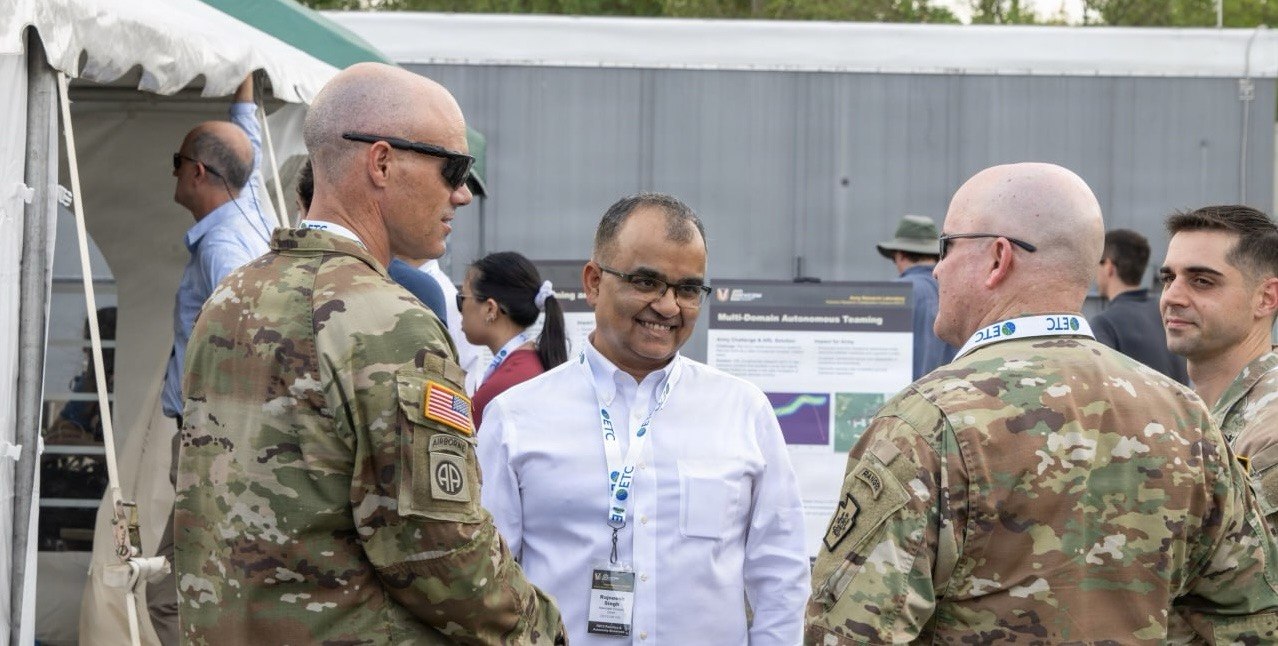
United States Army scientists and research partners demonstrated recent developments in artificial intelligence, autonomy, and robotics during Autonomy and Robotics Day at the ARL Research Robotics Research Collaboration Campus in Grace’s Quarters, Maryland. The showcase highlighted advancements aimed at improving soldier-autonomous teaming, enhancing operational efficiency, and reducing risks in hazardous environments.
Organized by DEVCOM Army Research Laboratory, the event featured innovations designed to bridge the gap between human instruction and robotic execution. Dr. Rajneesh Singh, associate chief of ARL’s Information, Autonomy and Teaming Sciences Division, noted that these breakthroughs advance the science of intelligent systems to support seamless human-machine communication, allowing warfighters to prioritize critical decision-making while autonomous platforms handle complex and dangerous tasks, reported by DVIDS.
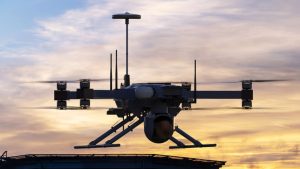
Exhibited technologies included tactical tasking systems that enable air-ground autonomy teams to plan missions based on operator intent and share information through real-time semantic maps. Researchers also presented the DIESL program, which supports a hands-free, weapons-up posture for soldiers by enabling autonomous systems to automatically respond to personnel actions in degraded network environments. Additional demonstrations covered agentic air-ground teaming for natural language coordination, intelligent target detection at the edge, and multi-agent swarm tactics designed to assign and execute tasks independently following human directives.
Furthermore, the laboratory highlighted integrated simulation and modeling workflows that evaluate robotic responses to terrain and threat conditions prior to live testing. Future efforts will focus on scaling these technologies and transitioning matured capabilities to government, academic, and industry partners for further operational adoption.