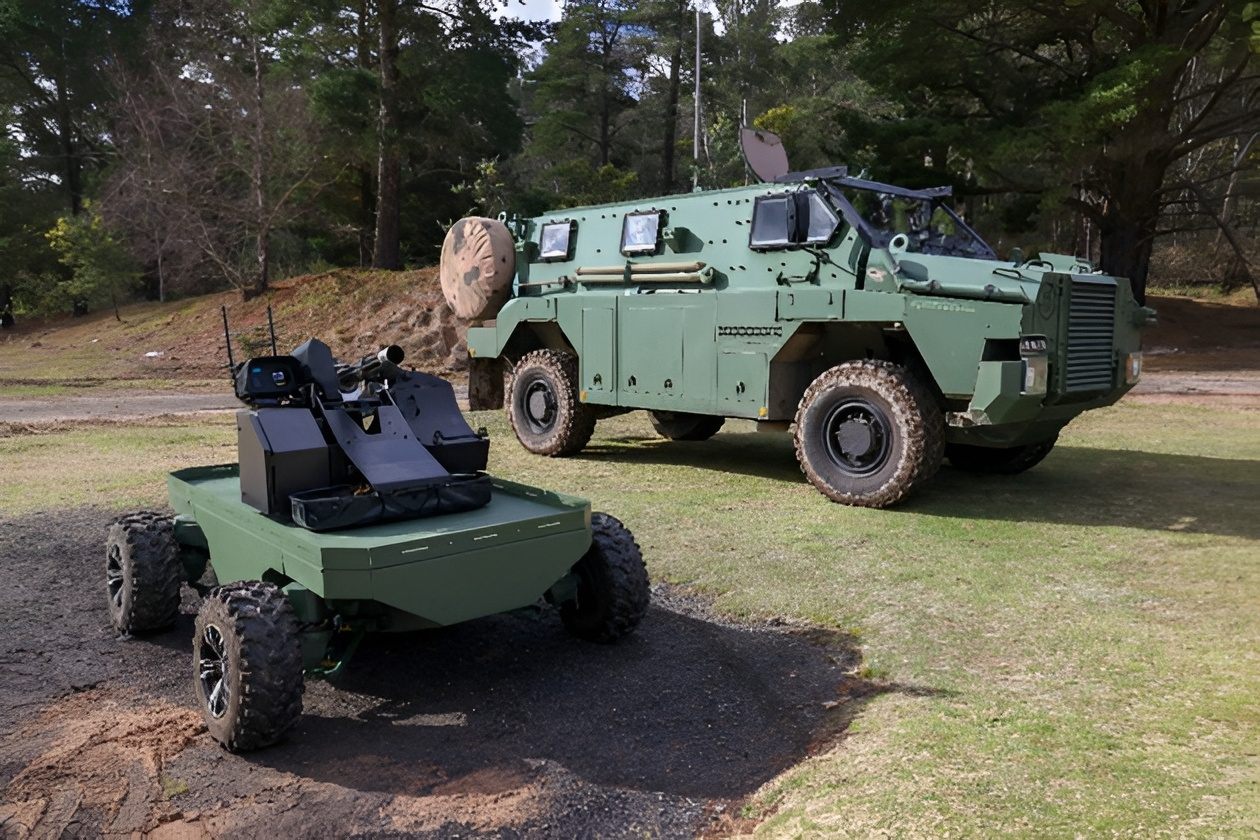
Thales Australia has demonstrated a rapid “concept-to-capability” timeline by turning a drawing board concept into a fully functioning, armed unmanned ground vehicle (UGV) within just six weeks.
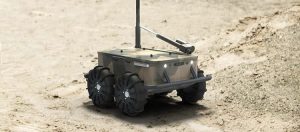
Dubbed the Guardian Angel, the four-wheeled autonomous platform has already successfully completed live-fire testing. To bring the system to life on an accelerated timeline, Thales Australia collaborated with two local industry partners: Chaos 1, which specializes in rapid prototyping and autonomous system experimentation, and W&E Platt, a manufacturer of custom weapon mounts. The resulting prototype features W&E Platt’s low-cost Remote Operated Weapon PLATTform (ROWP), integrated with a Dillon M134D Minigun.
According to company statements, the project highlights the firm’s sovereign industrial capability to rapidly deliver and manufacture autonomous combat solutions designed to protect warfighters. While the Guardian Angel itself is a technology demonstrator rather than a commercial product, it lays the groundwork for modular, containerized mission systems capable of executing medical evacuations, troop logistics, cargo transport, and direct fire support.
Andrew Downes, Vice President of Land at Thales Australia, noted that UGVs allow military forces to operate in high-risk environments while maintaining a tactical edge. He emphasized that these scalable, cost-effective platforms significantly expand operational reach without placing personnel in direct danger.
Reflecting on the accelerated production schedule, Benny Johanson, Founder and CEO of Chaos 1, described the project as rapid prototyping in its truest form—an intense, high-risk process that moved from initial concept graphics to live-fire testing in 42 days, proving how quickly defense industry partners can deliver results under pressure.
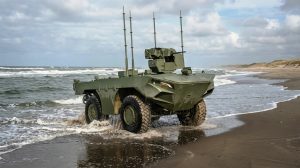
The development aligns with broader efforts within the Australian Defence Force to integrate uncrewed ground systems into field operations. The Australian Army is actively experimenting with multiple robotic platforms, ranging from BAE Systems Australia’s optionally crewed M113AS4 tracked vehicles and the heavily armed ATLAS 8×8 demonstrator to Cyborg Dynamics Engineering’s Warfighter UGV. Smaller platforms, such as Outlook Industries’ GUS for coastal surveillance, as well as disposable kinetic platforms like GaardTech’s Jaegar-C and DefendTex’s Banshee, are also being evaluated.
Military leadership has signaled that these platforms will soon participate in upcoming tactical exercises. Brigadier Ben McLennan, commander of the Australian Army’s 3rd Brigade, indicated that sacrificial UGVs could soon be deployed for high-danger tasks such as breaching minefields by dragging explosive charges across hazardous terrain, showcasing just one of many expanding battlefield applications for autonomous ground combat systems.