The Chinese military is investigating the integration of artificial intelligence into hypersonic missiles to enhance their ability to bypass U.S. missile defenses, according to a report by the China Aerospace Studies Institute.
As reported by The Washington Times, researchers at Nanjing University of Aeronautics and Astronautics are developing AI-enabled neural networks for intercept avoidance to allow missiles to elude defensive strikes. The study focuses on methods for sensing flight paths and adapting patterns during flight to counter emerging American defense technologies.
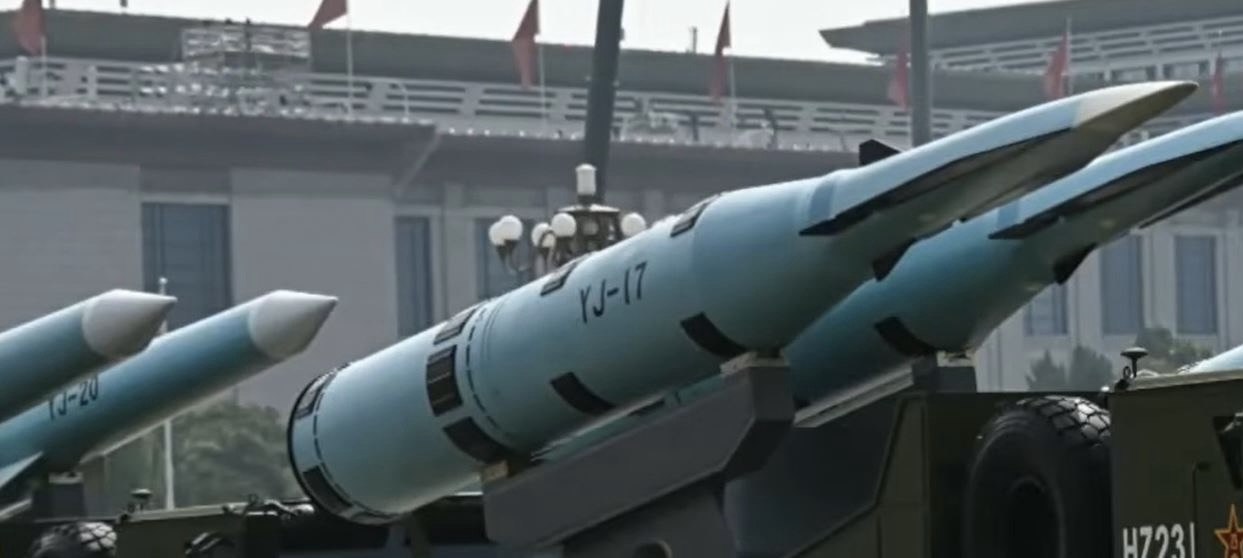
China’s primary hypersonic glide vehicles are carried by DF-17 and DF-27 missiles, with newer variants including the YJ-15, YJ-19, YJ-17, and YJ-20 systems. While maneuvers have traditionally been pre-programmed using computer algorithms, the new research seeks to dynamically compute commands to evade anti-missile systems.
The report noted that it remains unclear whether these glide vehicles are currently capable of operational intercept avoidance due to integration challenges. Meanwhile, the Pentagon is advancing counter-technologies, including the Glide Phase Interceptor and the Hypersonic Ballistic Tracking Space Sensor, supported by satellite networks and AI-powered tracking sensors.