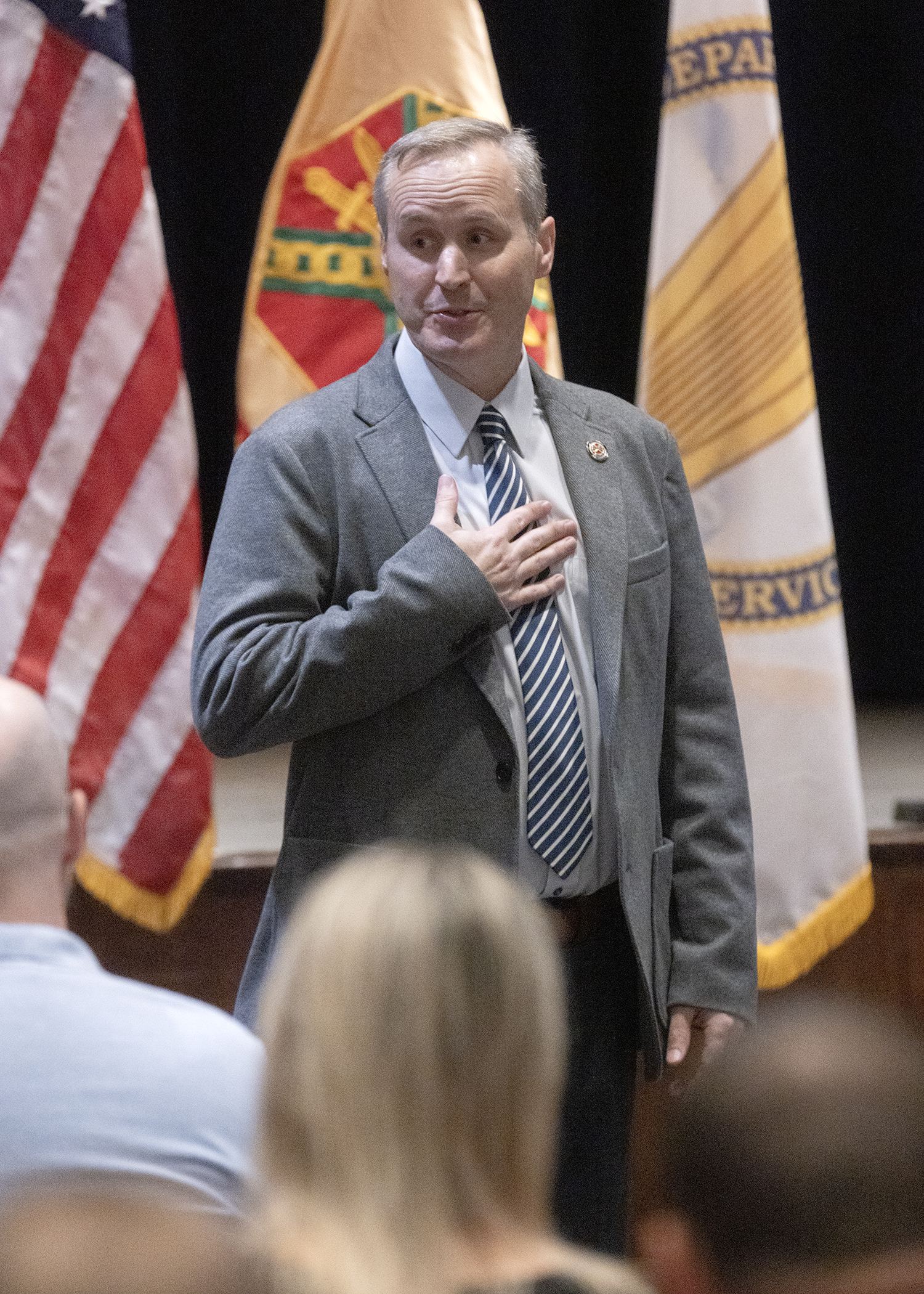
A retelling of remarks by Jason Condrey, Director of U.S. Army Installation Management Command – Sustainment, while speaking to the U.S. Army Garrison Picatinny Arsenal workforce.
Fielding a question about emerging technologies the workforce should be watching, Condrey didn’t hesitate to name AI as the one poised to reshape how garrisons operate. “I will tell you what I believe is going to change the way we work and operate,” he said.
Condrey pointed specifically to the aggregation of data as the area where AI could improve processes across the many functions U.S. Army garrisons oversee — project construction, infrastructure maintenance, emergency services, and community welfare programs among them. A former U.S. Army officer and garrison commander himself, Condrey now oversees base operations, infrastructure, and quality-of-life programs for dozens of Army garrisons, depots, and arsenals supporting Army Materiel Command and other specialized commands — a vantage point that has left him well acquainted with the strain of limited manpower.
That firsthand frustration is precisely what makes AI’s potential exciting to him. “It starts with somebody sitting in this audience going, ‘hey, there’s got to be a better way to do this,'” Condrey said of the data-collection challenge facing garrisons today. “We don’t have enough people, we don’t have enough money, but if we can figure out how to give ourselves time back, that is a win. Time is honestly the most critical resource that we don’t have enough of.”
He also framed AI adoption as a self-reinforcing process: the more people across the workforce use the tools, the more the underlying models improve through iterative learning and real-time feedback, becoming increasingly precise, adaptive, and effective at supporting mission-critical requirements.
Condrey closed the discussion with Picatinny Arsenal professionals on an open-ended note about the technology’s ceiling. “Once it (the technology) is inside our systems, and we can leverage it, we are limited by our own creativity,” he said.
Source: DVIDS