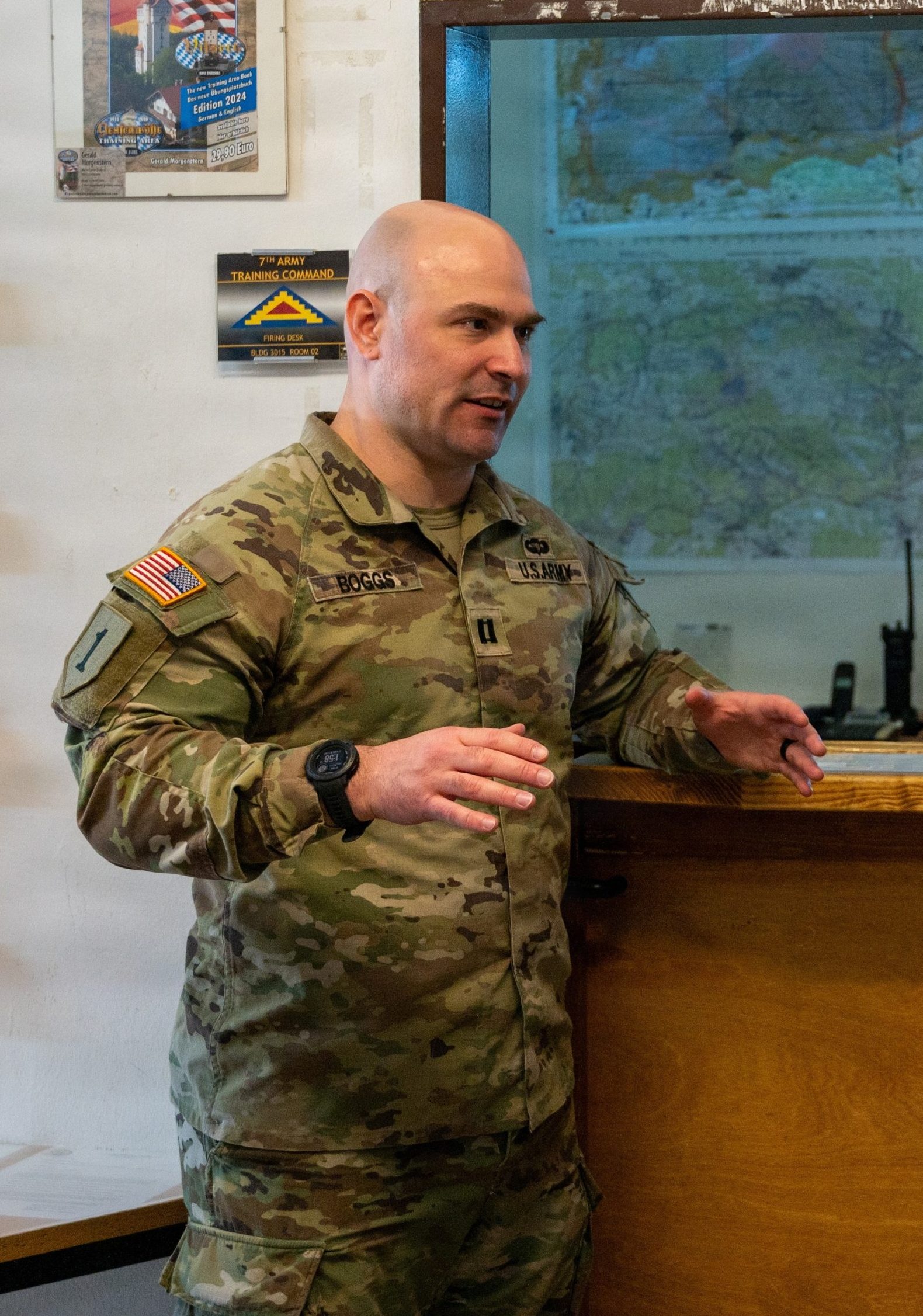
A reflection by Capt. Justin Boggs, Grafenwoehr Training Area Range Operations, Training Support Activity Europe, 7th Army Training Command, on the growing role — and growing risks — of armed drones on the battlefield.
Armed forces across the globe are strapping explosives to remote-controlled drones. These small unmanned aerial systems (sUAS) are game changers, allowing units to gather crucial information and deliver deadly strikes without putting Soldiers directly in harm’s way. But this incredible tactical advantage brings plenty of new dangers to the battlefield, Boggs writes. While these drones are undeniably helpful for commanders and Soldiers alike, understanding the risks they introduce is the only way to figure out the best methods to keep formations safe.
The dangers of the drone fight
Using armed drones is a classic double-edged sword, according to Boggs. On one hand, they give troops a major advantage. On the other, the risks are serious, including friendly fire mishaps, enemies turning the technology against its operators, and drone operators inadvertently making themselves easy targets.
Dropping a bomb from a small, flying drone is surprisingly difficult, Boggs explains. A simple mistake, a sudden drop in communication or even a strong gust of wind can send an explosive way off course, meaning the risk of accidentally injuring friendly troops or bystanders is always looming.
Every drone also sends signals back to its operator, and to an enemy, that signal is a homing beacon. Once traced, adversaries can fire rockets or mortars right at the Soldier flying the drone, or send their own drones to drop munitions. They can also jam the signal to crash the drone or hack in to hijack it — and since these systems are cheap, enemies can easily buy their own and throw the exact same threats back.
Boggs adds that current counter-drone equipment is often large and, frankly, ineffective. When Soldiers don’t trust their equipment to do the job, it kills morale and puts them at unnecessary risk.
How to reduce the risks
Boggs outlines three areas commanders can focus on to manage these threats and protect Soldiers.
The first is drone and anti-drone training for everyone. As seen in current conflicts, defending against drones is everybody’s business, he writes: “The old idea of a safe rear area and a clear front line just won’t hold up in the next fight.” Units need multiple drone operators down to the squad level, not just one or two in a platoon and a handful in the company headquarters platoon. Drone defense also can’t be left to a few Stinger missiles placed around key command nodes by the battalion — layered systems are needed, mixing new tech with simpler, cost-effective approaches.
The second is practicing with dummy munitions. Swapping in blank or dummy rounds during maneuver training lets Soldiers build familiarity and effectiveness using an sUAS without the need for a dedicated live-fire impact area, greatly reducing the land and safety constraints required for practice.
The third is simplifying tactics and empowering decision-making. Boggs recommends sUAS operators live by “launch-and-run” tactics so they never stay in one spot too long, while Soldiers on the ground use hills, trees and buildings to hide from overhead eyes, adding local foliage and gear like poncho liners to mask their thermal signatures. Getting cheaper, lighter anti-drone gear down to lower echelons will drastically increase the size of a unit’s protective air-defense bubble. Armed drones need to be treated as expendable items, Boggs stresses, and commanders must plan for airspace coordination right at the start of their troop-leading procedures, not as an afterthought.
Final thoughts
Armed drones are here, and they are only going to get more sophisticated, Boggs concludes. While the dangers are real, the risks can be managed by training more Soldiers, practicing with dummy munitions to mirror how forces actually fight, and keeping tactics simple. The biggest takeaway, he writes, is that technology alone doesn’t ensure victory — reaping the benefits of armed drones without paying a heavy price means weaving both flying them and fighting them into the daily habits of every Soldier.
Source: USA CRC