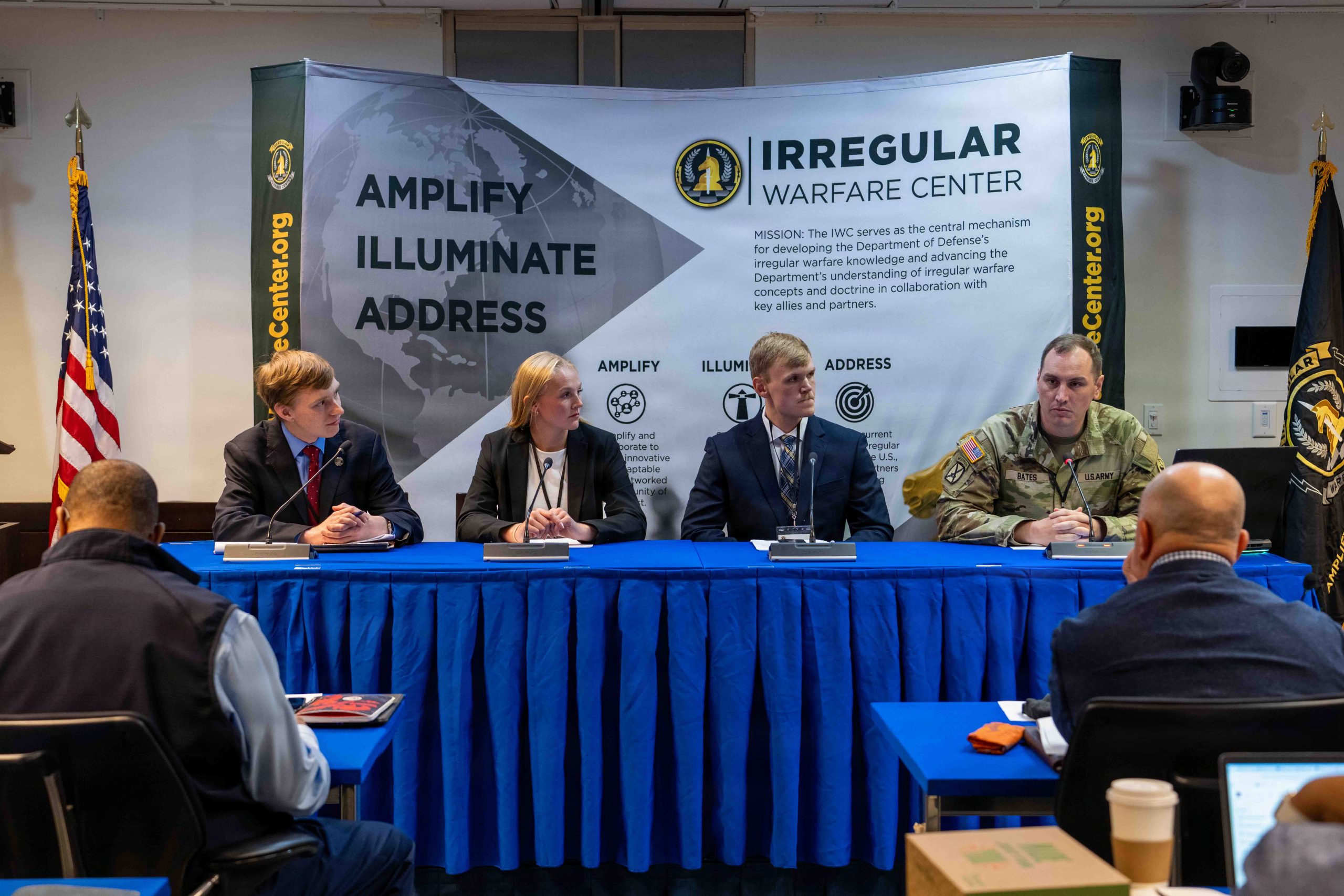
The Irregular Warfare Center (IWC) at the United States Department of War recently concluded its fourth annual Scholars Colloquium at the National Defense University in Washington, D.C., bringing together researchers and practitioners from around the globe to address the impact of irregular warfare on the domestic defense of the United States. Out of numerous global submissions, 10 papers were selected for presentation during the two-day event.
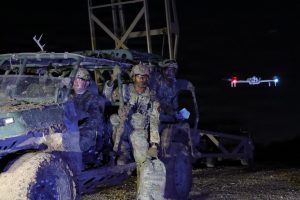
A dedicated 12-member research team specifically evaluated the emerging asymmetric threat of strikes across the United States posed by 3D-printed commercial off-the-shelf drones. Separate sessions also addressed foreign supply chain risks within domestic healthcare procurement, early warning biological systems, and cyber vulnerabilities across American transit and maritime network infrastructure, DVIDS reports.
Discussions further examined societal resilience, non-kinetic targeting, and economic levers, with scholars analyzing disaster-related disinformation, psychological operations, fintech applications in modern statecraft, and European strategic sabotage precedents alongside neoclassical realist frameworks for whole-of-society defense aimed at strengthening the security of the United States.
Participants worked directly with center leadership in small working groups to refine their findings into actionable recommendations for national security. Highlighting how external threats increasingly impact municipal entities—such as the emergency management framework of New York City—Luke Boyce, a representative of the IWC Functional Area Network, noted, “Irregular warfare may originate far beyond a city’s borders, but its consequences can ultimately present themselves as local emergencies.”
“A cyberattack, disinformation campaign, disruption to critical infrastructure, or other hostile action may be part of a much broader strategic campaign, but at the local level, we experience those actions through their effects on people, infrastructure, essential services, and the economy,” Boyce added. “For emergency managers, that means understanding irregular warfare not only as a national security challenge, but as something we need to consider throughout the process as we prepare our communities for the emergencies of the future.”