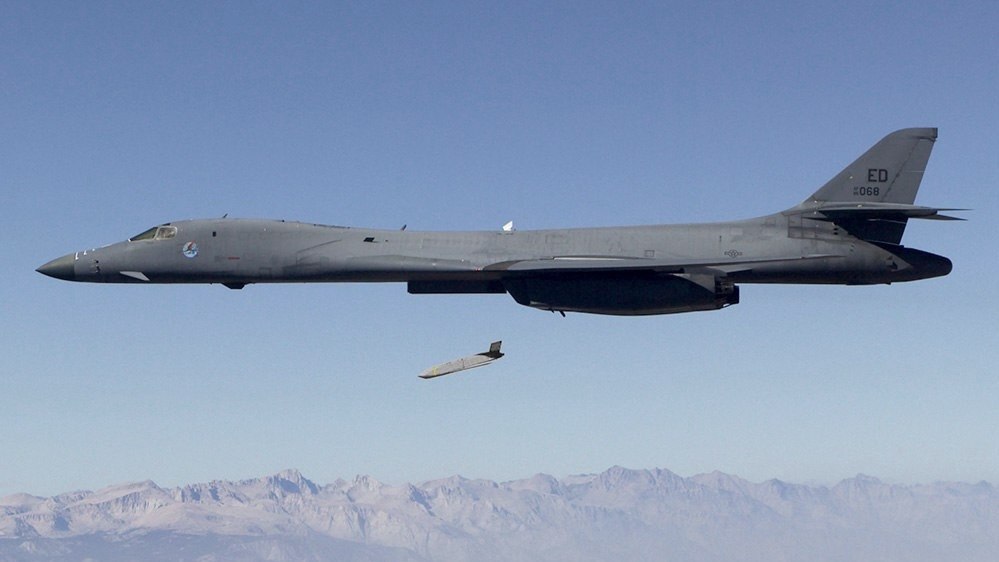
The US Air Force has awarded Lockheed Martin an $825.97 million contract modification to procure the Joint Air-to-Surface Standoff Missile and the Long-Range Anti-Ship Missile.
The modification brings the contract’s cumulative face value to $10.46 billion, with work scheduled for completion by July 31, 2030, in Orlando, Florida. Funding originates from fiscal 2024 through 2026 appropriations alongside $11.1 million in Foreign Military Sales funds, according to the U.S. Department of War.
This procurement expansion follows extensive deployment of the JASSM during the conflict with Iran. Reports indicate the US military utilized more than 1,000 JASSMs, primarily AGM-158B JASSM-ER variants, positioning it as the campaign’s most heavily used offensive munition. The intensive usage drew heavily from stockpiles, prompting the transfer of munitions from other theaters to the US Central Command and European commands.
Future plans involve scaling production significantly to support the acquisition of up to 11,200 missiles across multiple lots over the next five to seven years, targeting an average rate exceeding 1,000 units annually. This marks a substantial increase from previous funding levels, which accounted for 450 JASSMs and 115 LRASMs in the fiscal year 2025 budget.
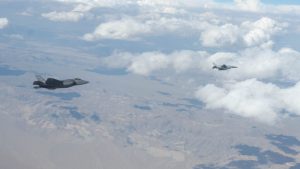
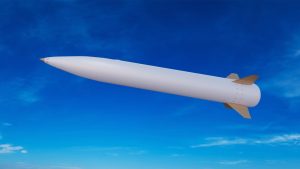
Both low-observable cruise missiles share a common architectural origin, with the AGM-158C LRASM derived from the airframe, turbofan engine, and manufacturing processes of the AGM-158B JASSM-ER. Each weapon carries a 992-pound penetrating blast-fragmentation warhead and exceeds a range of 500 nautical miles. While the JASSM utilizes GPS-aided inertial navigation and an imaging infrared seeker for land targets, the LRASM integrates passive radio-frequency sensors, an infrared seeker, and autonomous targeting capabilities tailored for maritime engagements in GPS-denied environments.