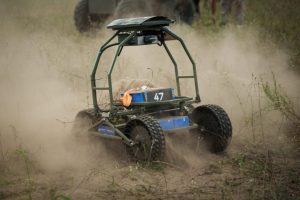
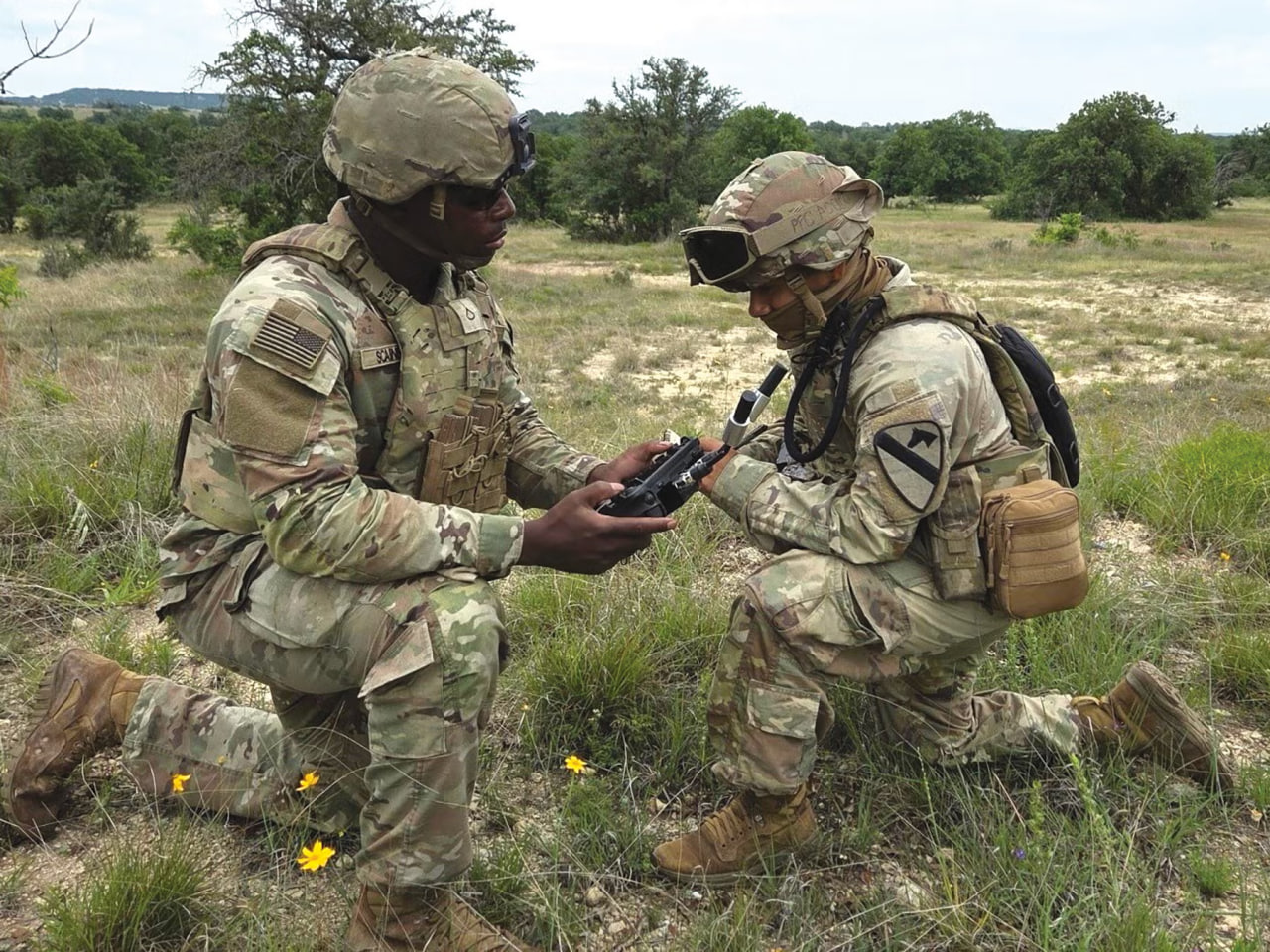
Sitting inside a modern armored vehicle on a hilltop at Fort Cavazos (formerly Fort Hood), Texas, military operators watched small-scale tactical unmanned aerial systems and AI-driven platforms execute complex reconnaissance tasks in minutes. Highlighted in an Association of the U.S. Army report by Senior Staff Writer Gina Cavallaro, the exercise forms part of the Army’s transformation in contact initiative launched in 2024. Operating under the internal branding «Pegasus Charge», the 1st Cavalry Division—which commands nearly 24,000 soldiers—is field-testing prototype technologies alongside a squadron of roughly 300 to 950 troops directly involved in the trials.
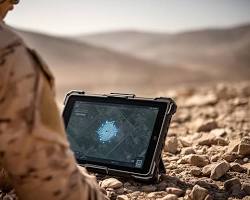
During forward operations, a Forward Support Troop commander evaluated a tablet-based navigation system in heavily jammed environments. Processing vehicle motion sensors and machine learning algorithms directly, this class of system ensures units maintain absolute situational awareness even when electronic warfare severs satellite coverage.
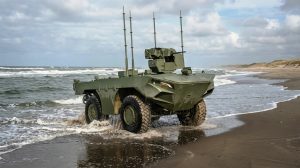
Military operators specifically noted testing technology from Tern AI to maintain precision positioning during these high-jamming field scenarios. “When you lose the capacity for maneuver and tempo, you are forced into static positional fighting, which is precisely what we aim to avoid,” stated Maj. Gen. Tom Feltey, commander of the 1st Cavalry Division. To support these rapid maneuver requirements, the squadron also established a new multifunctional strike troop and fielded 40 Armored Multi-Purpose Vehicles (AMPVs) on a Bradley chassis, replacing legacy M113 carriers to serve as mobile command nodes.
Complementing the hardware upgrades, soldiers in traditional 19D cavalry scout roles are cross-training under the new 15X tactical UAS specialist military occupational specialty, weaving drone control directly into ground operations. The division will continue iterative feedback cycles through late 2026 before advancing to the National Training Center at Fort Irwin, California, in March 2027 to finalize which experimental technologies enter permanent military doctrine.
A closer look at Tern AI reveals the core architecture behind such signal-independent positioning. On its official website, the defense technology company details its work building navigation infrastructure for military, fleet, and intelligent mobility applications. Powered by its proprietary Independently Derived Positioning System (IDPS™), Tern AI aims to deliver continuous navigation without relying on satellite GPS, RF signals, or any external infrastructure.
Beyond standalone navigation, Tern AI highlights its broader efforts to embed into the U.S. Army’s emerging Next-Generation Command and Control (NGC2) ecosystem. According to company disclosures, during operational trials such as «Operation Jailbreak», its technology was integrated with key defense platforms, including Anduril Lattice, Palantir Maven, and the Tactical Assault Kit (TAK). These integrations enable bidirectional workflows, allowing command hubs to transmit routing instructions to ground vehicles while simultaneously receiving precise positioning, real-time vehicle status, and operational metrics to support high-tempo maneuvering across contested battlefields.