On the night of September 11, Russian forces opened a new front against Ukraine’s data centers, striking the servers of the operator BeMobile in Kyiv. Most of its services were switched to backup sites and stable operation resumed. A string of separate drone strikes followed, and on September 23 Russian forces carried out a large-scale attack on data centers in Kyiv with drones, ballistic missiles, and anti-ship missiles. That same evening, fire broke out in the power system and backup generator of a Starlink ground station in Poland. The hybrid operation on the territory of a NATO member appears to have been part of a single military plan, designed to multiply the effect of the strikes on Ukraine.
One target, different methods
Poland’s Deputy Prime Minister Krzysztof Gawkowski called the fire at the Starlink station an act of sabotage aimed at disrupting internet services for a range of institutions, including the Ukrainian military. According to him, whoever caused the fire has not yet been identified, but “many signs point to this fitting Russia’s new doctrine of attack.”
Russia has repeatedly denied involvement in similar incidents in the past and is unlikely to claim responsibility for this one either. Either way, the station kept running, so the attack did not achieve its goal. Poland remains on heightened alert for further acts of sabotage.
Russia’s Ministry of Defense, meanwhile, makes no secret of its intentions. On September 27, after days of strikes on Ukrainian data centers, it posted an image of a Shahed drone on social media captioned “Digital Detox — in mandatory mode.”
Russian forces claim the Kyiv telecommunications centers serve the Armed Forces of Ukraine’s communications and computing needs.
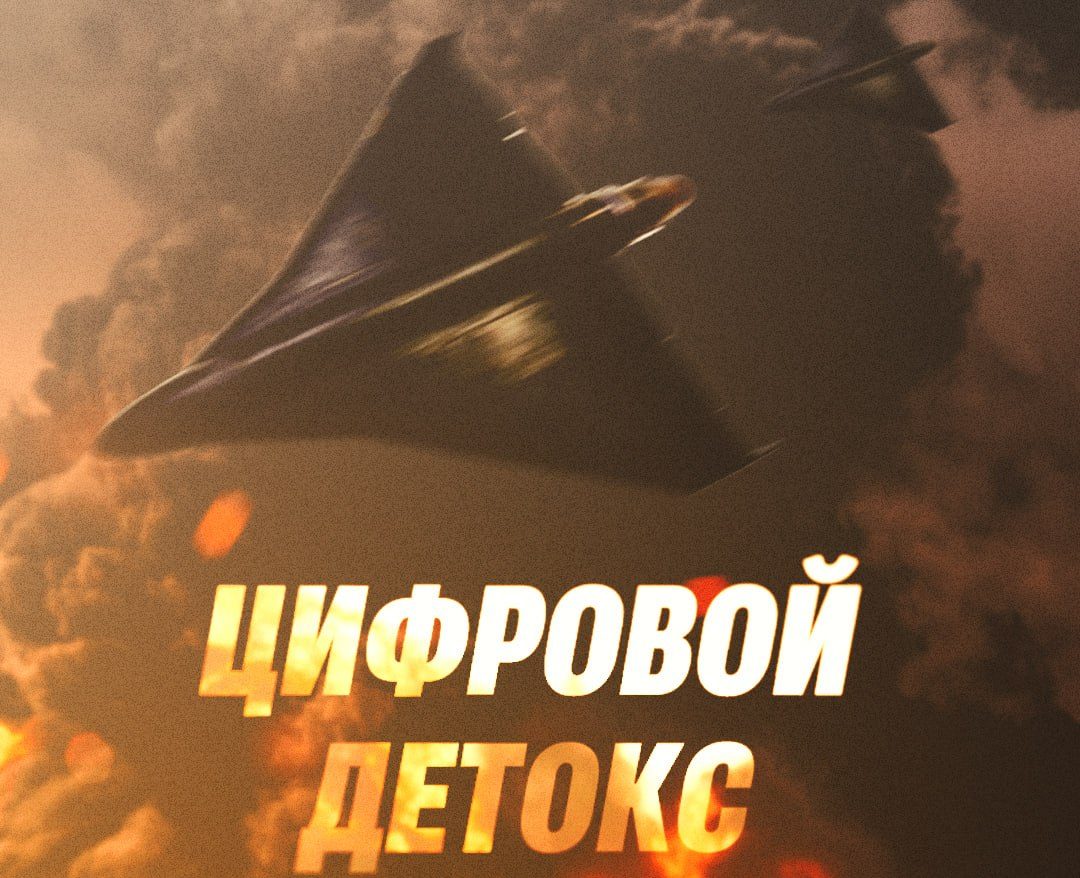
The image Russia’s Ministry of Defense posted on Telegram on September 27: a Shahed drone captioned “Digital Detox”
Weathering the strikes — and what comes next
Data centers underpin cloud services, websites, applications, telecommunications, and a range of government systems. After the September 23 strike, roughly 100,000 households in Kyiv and the surrounding region reportedly experienced degraded internet service.
Ukraine’s Ministry of Foreign Affairs said Russia was trying to disrupt the flow of information needed to warn civilians of missile and drone attacks in time.
Ukrainian operators moved quickly to contain the damage, switching to backup lines and equipment. Several networks were back up the same day. The military channel Army TV went off the air for roughly a day, though it kept broadcasting on YouTube and social media; it later resumed transmission via satellite and a direct internet feed (over-the-top).
Ukraine’s president announced additional measures to protect data centers and other infrastructure critical to communications, and to keep them running without interruption.
The drone strikes are pushing Ukrainian providers toward greater secrecy. Companies are growing less willing to disclose the location of their infrastructure publicly and are moving equipment to closed backup sites. After the September 24 strike, the provider Etherlink said that because its main hub had been damaged, it would relocate the core of its network elsewhere.
The Russian military continues to strike Kyiv: on September 27, jet-powered drones hit the data center of the mobile operator Kyivstar twice. So far, though, it has not managed to critically disrupt Ukraine’s digital infrastructure.
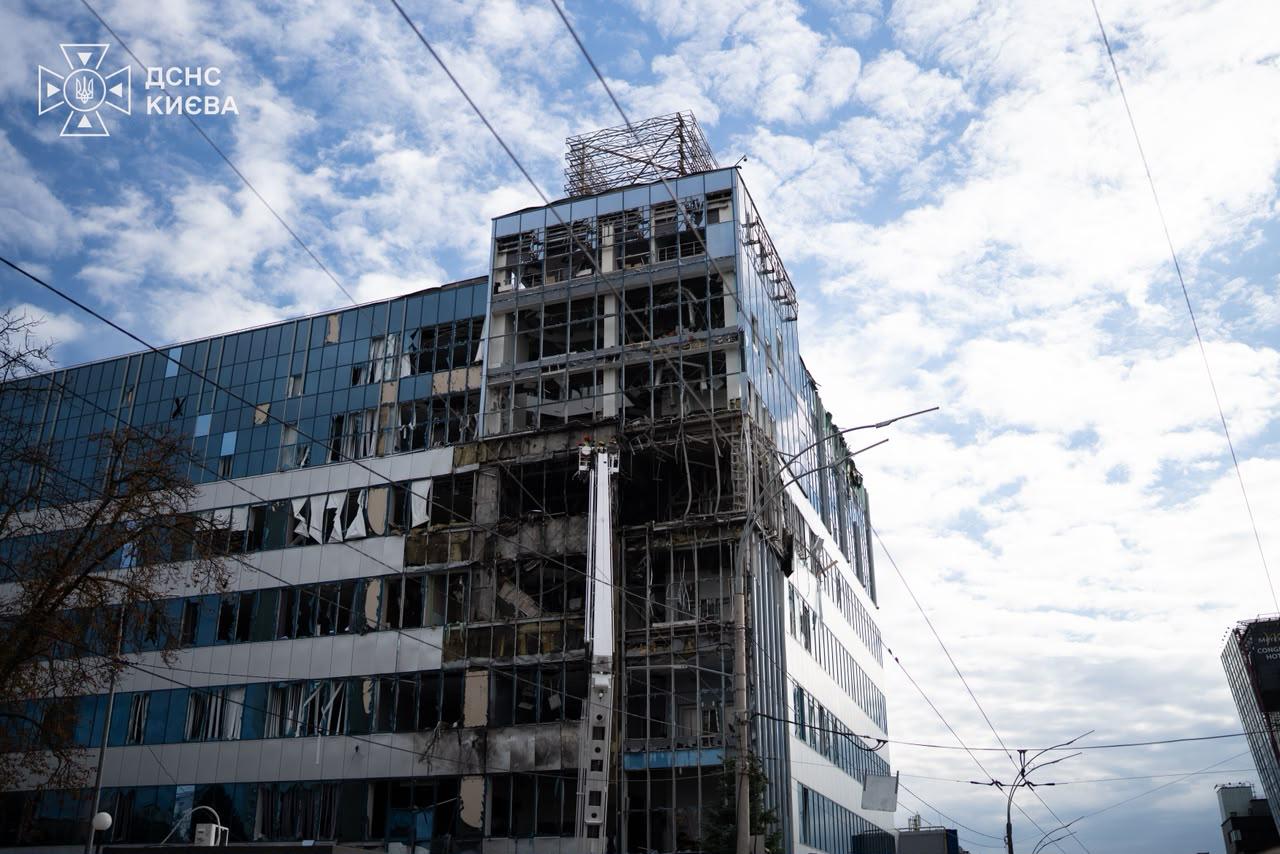
A data center building in Kyiv damaged in a Russian strike. Photo: Kyiv City Emergency Service (DSNS)
Why a total blackout is unlikely
The defining feature of Ukraine’s telecommunications system is the sheer number of independent operators and providers. That is precisely what makes the network more resilient to any attempt to switch off the internet across the country all at once.
Knocking out thousands of operators at the same time is not possible. Some will inevitably go down while others stay up. Large businesses and government bodies have long worked with several operators at once — typically two or three — so that losing one channel does not bring operations to a halt.
A scenario in which the internet disappears massively and for a long stretch across the whole country is not realistic. What can happen is that the cost of access rises and service quality deteriorates.
The key condition for keeping networks running remains a stable power supply. Servers, switches, routers, base stations, and other equipment all need electricity, and backup batteries and generators can only run for so long. The greatest danger may come not from isolated strikes on individual data centers but from a combined scenario in which telecommunications nodes and energy infrastructure are hit at the same time. Russia has already run massed missile campaigns against Ukraine’s power grid, though — which means that, with Western support, Kyiv is far better prepared for such a scenario than Moscow is.
People in glass houses shouldn’t throw stones
Ukraine can lean on European digital infrastructure and back up its data in data centers under NATO’s umbrella. Sending a signal to a distant European server takes an average of 25–45 milliseconds; over transatlantic cables to the US, it takes 120–200 milliseconds. To reliably take down Ukraine’s digital infrastructure, Russia would have to run sabotage operations against data centers in Europe itself.
Russia, meanwhile, passed its “sovereign internet” law in 2019 and has spent the years since building a centralized, isolated national segment of the internet (Runet) under full state control and censorship. Separately, Russian law also requires that servers used to collect and store Russian citizens’ personal data be located inside the country. Together, these policies mean that far more of Russia’s own digital infrastructure sits inside its own borders — within range of Ukrainian strikes — than is the case for Ukraine.
Russia’s digital infrastructure, like Ukraine’s, was built up in peacetime, when the idea of a drone or missile strike on Moscow still belonged to science fiction. After the attacks on Kyiv, the Ukrainian cyber-volunteer and hacktivist project HackYourMom compiled a map of Russian data centers, listing their known addresses, coordinates, and capacity. The overwhelming majority are concentrated in the European part of the country — squarely within range of Ukrainian drones. If Kyiv ever decides to play Moscow’s own “digital detox” game, it has a wide and growing arsenal to do it with.
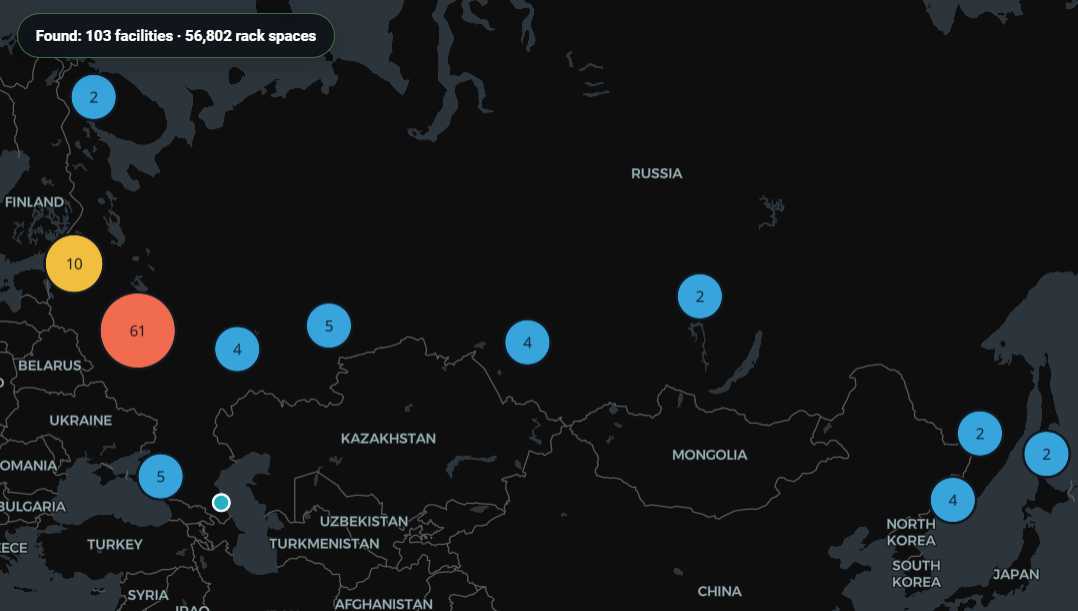
Map of data centers in russia Screenshot: hackyourmom.com