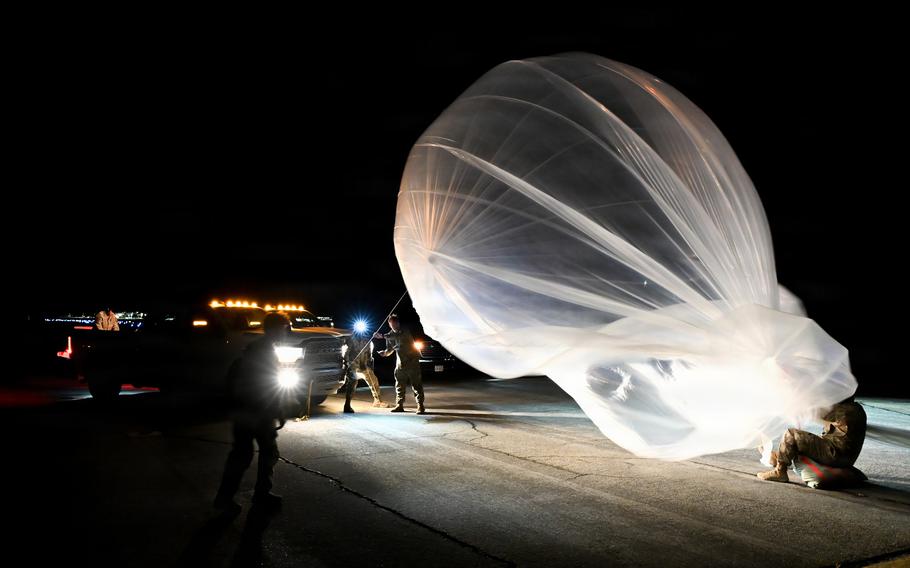
The U.S. Army is turning to the stratosphere to address modern battlefield sensing and communications challenges along NATO’s eastern flank. As part of exercise Cold Raptor, military personnel launched micro high-altitude balloons from Powidz, a major American logistics and aviation hub in western Poland, evaluating how lightweight platforms operating at 60,000 to 70,000 feet can support multi-domain operations.
The tests form part of the Eastern Flank Deterrence Initiative, a broader effort to strengthen NATO’s posture in Europe following insights gained from the war in Ukraine. In modern high-intensity conflict, widespread electronic warfare and drone usage require forces to maintain communications and surveillance while constantly exposed to detection. Operating above standard commercial airspace and weather disruptions, these balloons offer a flexible method to deploy intelligence, surveillance, and reconnaissance sensors, electronic warfare tools, and communications extensions. This was reported by Stars and Stripes.
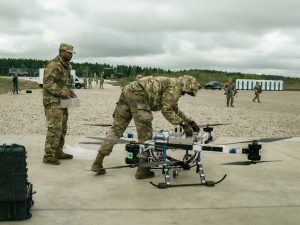
Measuring roughly 33 feet tall when inflated, the balloons carry payloads weighing between 20 and 45 pounds. During the Cold Raptor exercise, teams launched platforms carrying experimental payloads from Powidz and recovered them near Ustka, a coastal town on the Baltic Sea approximately 190 miles north. Soldiers managed and monitored flight paths remotely, validating procedures for decentralized control and cross-border airspace coordination across Europe’s densely packed borders and variable stratospheric wind currents.
Multi-Domain Command-Europe oversaw the test, which builds on more than 50 launches conducted over the past year, including prior trials at the National Training Center in California and during exercises Sword 26 and Aurora 26 in Sweden. Command officials noted that the platforms are designed to provide dynamic sensing and communications augmentation alongside uncrewed aerial systems and ground-based electronic warfare capabilities. The Army will now evaluate data from the exercise to inform future defense acquisition and technology development decisions.