Under a strategic memorandum of understanding finalized during the Eurosatory 2026 international defense exhibition, Ukrainian defense firm AIDronesUA is partnering with Sweden’s Njord Technology AB to jointly manufacture the MAUL unmanned ground vehicle (UGV) in Sweden.
According to statements provided to Defender Media, the joint initiative aims to achieve an annual manufacturing capacity of 400 to 500 robotic platforms, with the majority slated for delivery directly to the Ukrainian Defense Forces.
The companies are currently finalizing the necessary regulatory documentation and consulting with Swedish authorities. To manage local manufacturing and operations, the partners plan to establish a Swedish legal entity in the near future. Under the agreement, AIDRONESUA retains complete intellectual property rights and will lead platform development and combat-driven upgrades, while Njord Technology AB will provide engineering support and local manufacturing facilities to scale output and reduce delivery timelines.
NJORD Technology AB noted that the collaboration will foster joint innovation, accelerate the development of next-generation robotic solutions, and deepen industrial cooperation between Ukraine and Sweden.
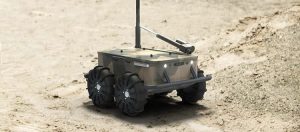
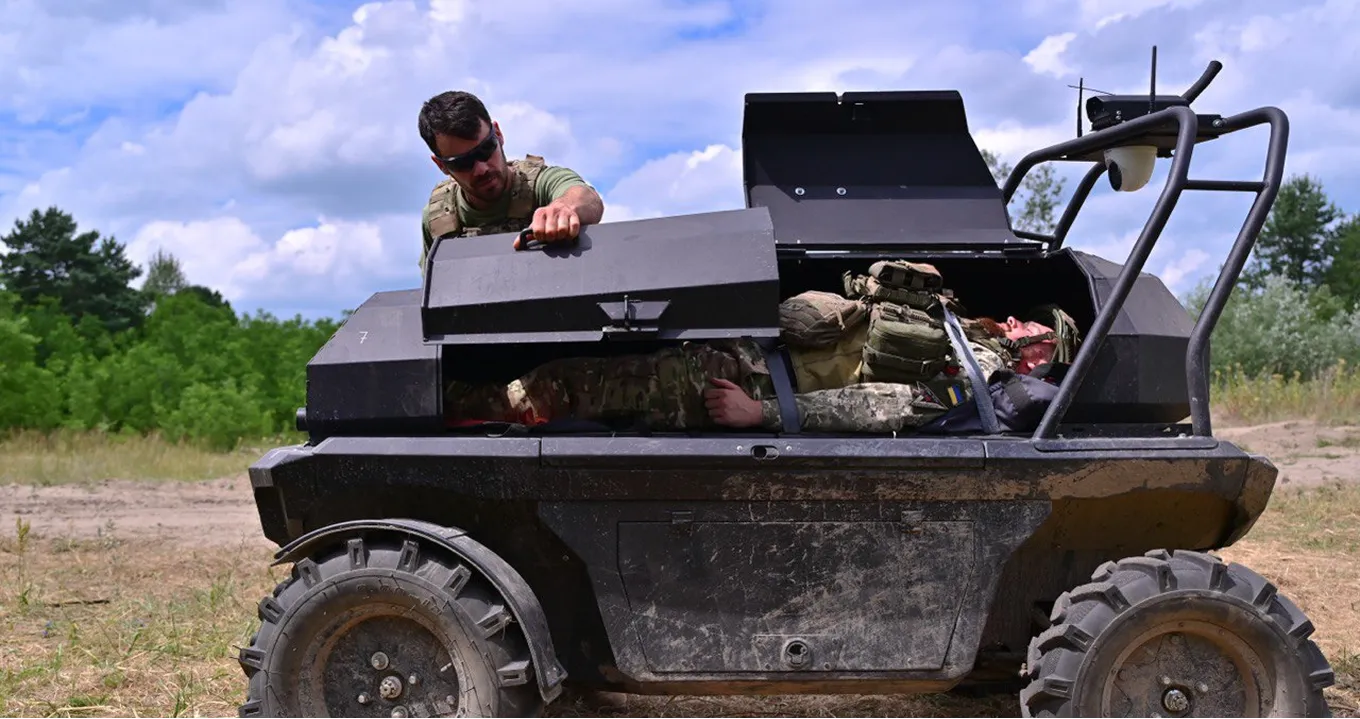
The MAUL platform is a specialized 4×4 unmanned ground vehicle engineered specifically to evacuate wounded personnel from high-hazard zones inaccessible to traditional combat medics. Designed using direct operational input from frontline medical specialists—including the First Separate Medical Battalion—the platform is optimized for survivability and rapid deployment.
Unlike many battery-powered UGVs, the MAUL utilizes an internal combustion engine driving a 4×4 wheeled chassis. This powertrain enables an operational range of up to 110 km on paved roads (reaching speeds of 50 km/h) and up to 100 km across rough terrain (at speeds up to 40 km/h). The vehicle deploys in under 10 minutes, carries a maximum payload of 200 kg, and can operate continuously for up to five hours, with an autonomous standby time of up to 48 hours. Beyond medical evacuation, the platform accommodates cargo transport and field logistics in complex contested environments.
The platform has already seen operational deployment in Ukraine through a licensing agreement signed in 2025 with Ukrainian manufacturer DevDroid. As part of scaling production, DevDroid codified the platform and integrated its proprietary DroidBox remote control architecture. The DroidBox system enables multi-channel communications—including fiber-optic lines and satellite internet links—ensuring flexible signal resilience based on user requirements.