Ukrainian company Besomar has unveiled two unmanned systems — the military Besomar 1100 reconnaissance system and the civilian Besomar 3210 FV for aerial photography and mapping. The developments are being created with support from the Brave1 grant program and the European Cluster for Drone Innovation (ECDI).
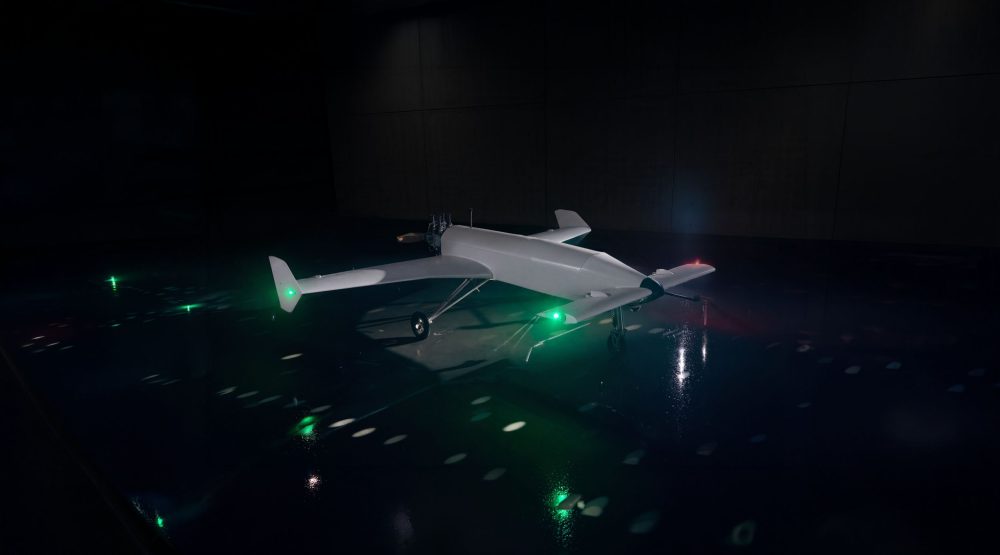
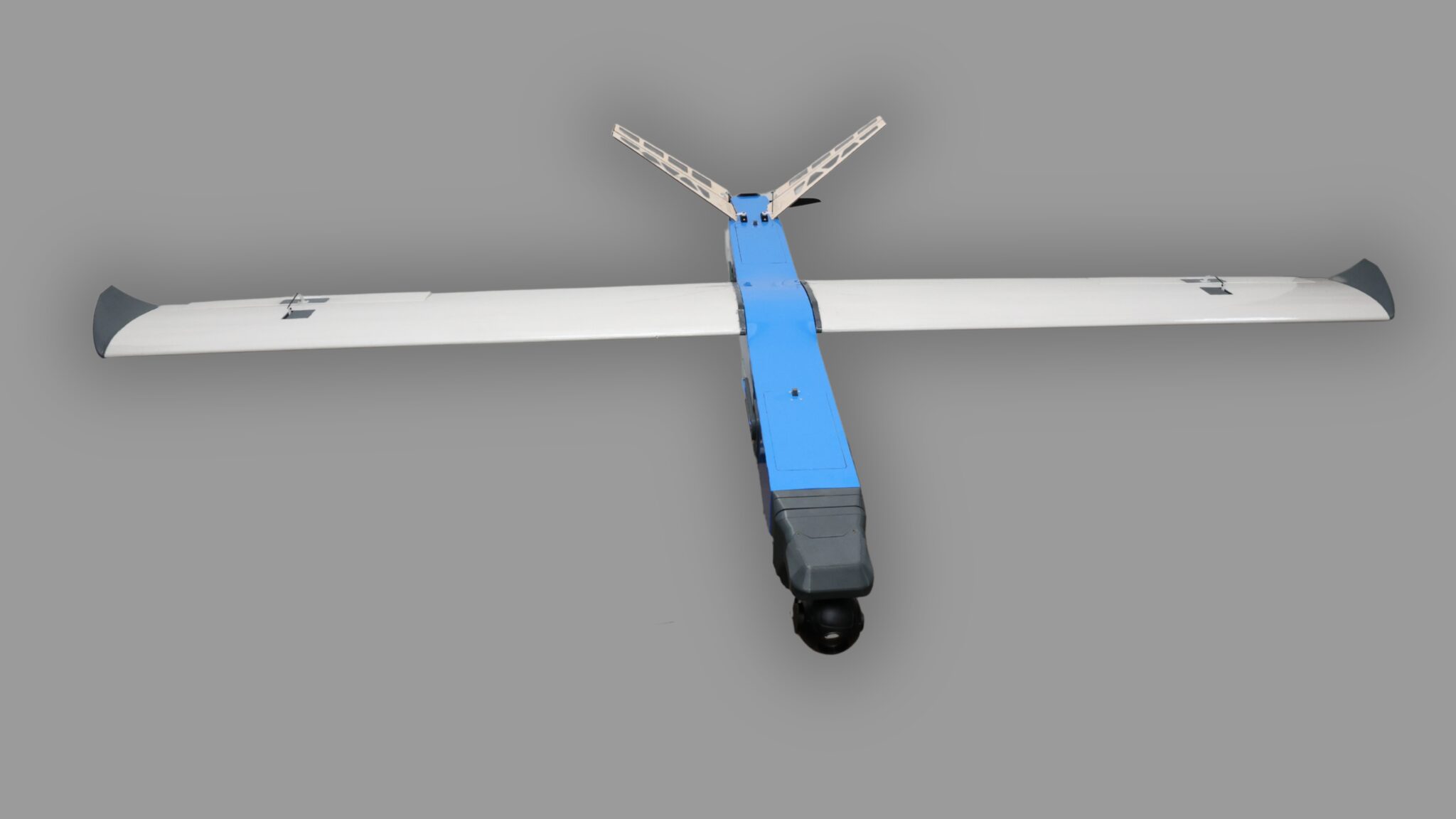
The Besomar 1100 is designed for aerial reconnaissance and long-duration surveillance. The drone features a conventional fixed-wing configuration with a straight high-mounted wing and V-shaped tail. A pusher propeller is installed at the rear, while an electro-optical surveillance system mounted on a gyro-stabilized gimbal is positioned under the front section of the fuselage.
The Besomar 1100 has an operating radius of up to 100 km and a flight endurance of up to four hours. Its cruising speed is 90–100 km/h, with a maximum speed of up to 160 km/h. The drone can operate at altitudes of up to 5,500 meters. The system incorporates special technical solutions to counter electronic warfare systems, according to Besomar.
The system is already being delivered to Ukrainian units for combat use.
At the same time, Besomar, together with Farsight Vision, is developing the Besomar 3210 FV for aerial photography, mapping and the creation of digital terrain models. The project is being implemented as part of the ECDI Civil Drones Innovative Programme.
Field tests of the system were conducted in Ukraine in August, covering the full operational cycle — from carrying out a flight mission and collecting aerial imagery to its subsequent software processing. During a test imaging mission, the drone covered approximately 2.9 square kilometers, and the collected imagery was used to create an orthophoto map.
The Besomar 3210 FV has a takeoff weight of 9.7 kg and can carry a payload of up to 1 kg. The drone can cover a route of up to 200 km, has an operating radius of up to 60 km and can remain airborne for more than three hours. Its cruising speed is 80–90 km/h, while its maximum speed reaches up to 160 km/h.
The Besomar 3210 FV is launched from a catapult and lands automatically. The aircraft is integrated into the Besomar ecosystem, operates with the company’s own ground control station and can use beacon-based navigation without relying on GPS.