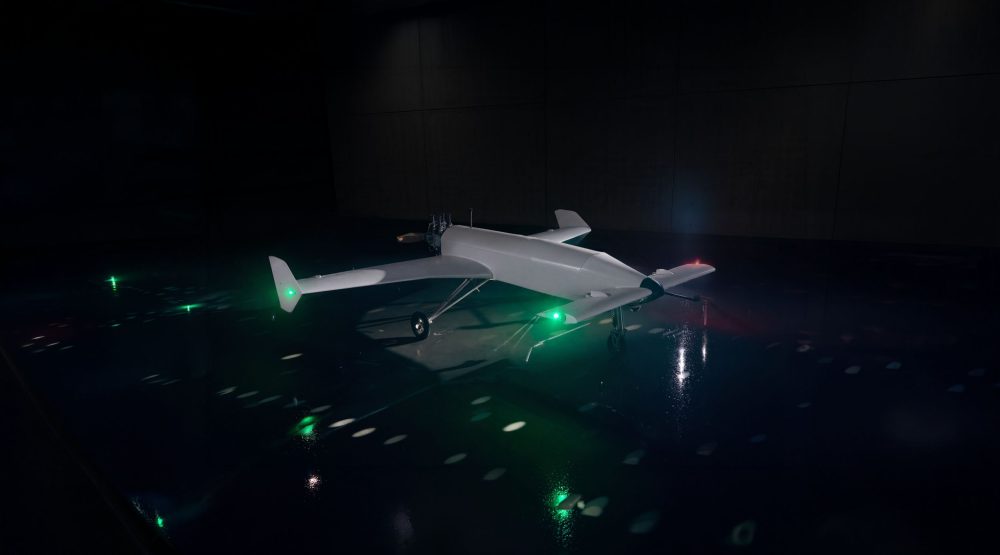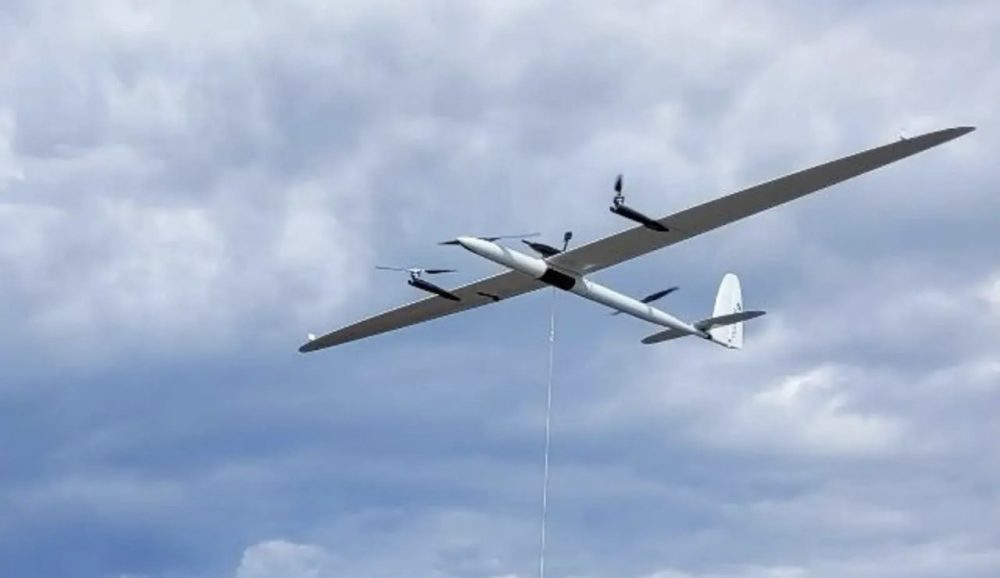
Norwegian company Kitemill presented its Kitewall tethered unmanned aerial vehicle (UAV) at the DroneX exhibition in London. The system uses technology originally developed for generating electricity from wind, which is now being applied to long-duration ISR missions.
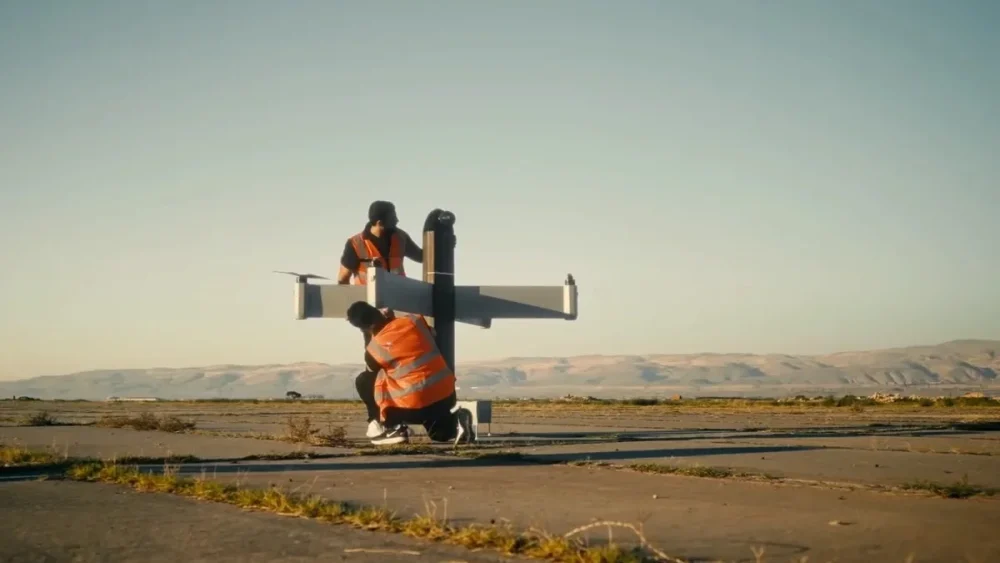
Kitewall generates power through the tension in its tether: the UAV pulls on the tether during flight, while a generator at the ground station produces electricity. According to Kitemill, the system has a wind power generation capacity of 15 kW.
The UAV can operate at an altitude of up to 500 meters and carry a payload of up to 20 kg. Kitemill positions Kitewall as a platform for continuous intelligence, surveillance and reconnaissance (ISR) missions.
The system can use electro-optical and infrared sensors, as well as radio-frequency detection equipment. Kitewall has an open payload architecture, allowing customers to integrate their own sensors and communications equipment.
At an altitude of 500 meters, Kitewall has a stated line-of-sight range of 80 km. Individual systems can operate independently or be deployed in a “wall” formation, combining sensor data and creating overlapping coverage areas for surveillance of a wide area.
The tether can also incorporate a fiber-optic line for data transmission. According to Kitemill, the system generates surplus electricity that can be used to power ground equipment.
Kitewall can also operate without being tethered to a ground station. In this mode, the UAV is intended for ISR missions and has a stated radio line-of-sight range of up to 50 km. The data link uses AES-256 encryption.