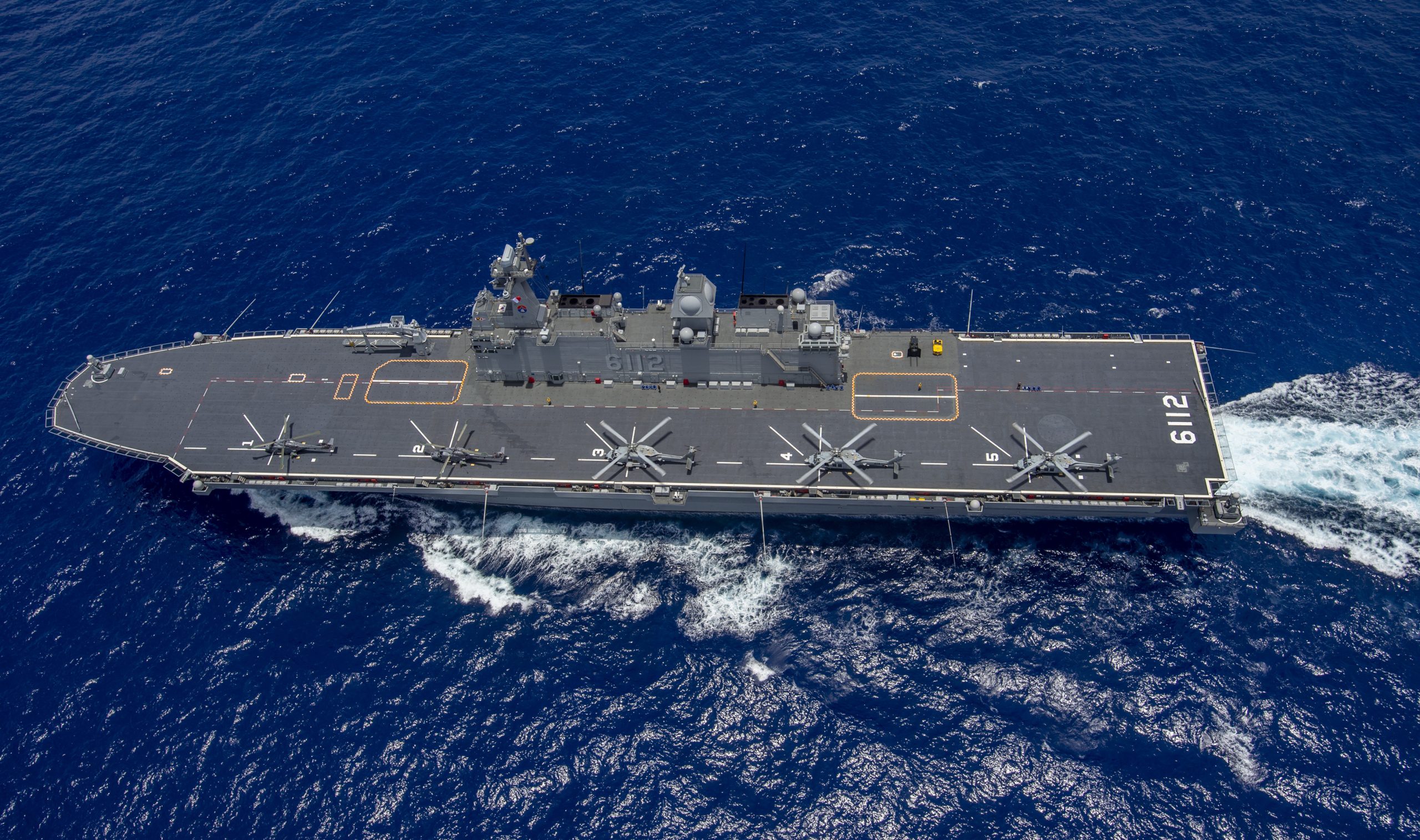
South Korea’s Agency for Defense Development (ADD) and the Republic of Korea Navy conducted the first maritime demonstration of a domestically developed medium-sized suicide drone aboard the amphibious assault ship ROKS Marado. The sea trial, held off the coast of Busan, aimed to evaluate the deployment of shipborne loitering munitions as part of efforts to expand lower-cost maritime strike options for large surface vessels.
During the demonstration, two prototype aircraft crashed into the sea shortly after launch, preventing the evaluation from proceeding to the target detection and strike phases, as reported by The Korea Herald. The first drone was launched at approximately 3:30 p.m. using a rocket-assisted system on the flight deck, but lost altitude and fell into the water seconds later. After technicians inspected the setup, a second aircraft was launched two hours later and experienced an identical failure.
Engineers noted that key launch mechanics functioned within standard parameters, with rocket boosters separating correctly and propellers engaging normally. The cause of the dual crashes remains under investigation using telemetry data and recovered debris.
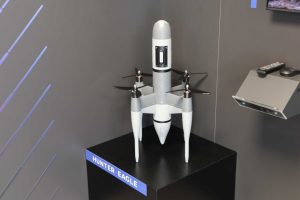
Unlike basic fire-and-forget loitering munitions, the South Korean system is engineered as a high-end platform capable of long-range intelligence, surveillance, reconnaissance (ISR), and terminal strike missions. The medium-sized drone features modular payload options, electro-optical and infrared sensors, low-Earth orbit satellite connectivity, and a maximum endurance of up to 10 hours on aviation fuel. Operating at a cruise speed of 130 kilometers per hour, the aircraft is designed to accelerate into a high-speed dive attack upon acquiring its target.
The project, initiated in 2024 to secure core technologies for future operational weapons systems, is led by ADD alongside defense contractors Korean Air, LIG Defense & Aerospace, and Hanwha Systems. Developers noted that approximately 10 prototype units had previously completed 30 land sorties without incident, even under stronger wind conditions than those recorded during Tuesday’s maritime trial. The development program is scheduled for completion in September, with telemetry analysis expected to guide subsequent system refinements.