American company Anthropic has released an alarming security threat report revealing facts of systemic abuse of advanced artificial intelligence technologies. According to the investigation data, a number of destructive elements and state actors have recently attempted to use the Claude artificial intelligence for developing cutting-edge weaponry, including missile programs and biological weapon research.
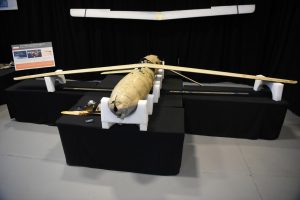
The spectrum of recorded incidents demonstrates the severity of the challenges faced by developers of advanced software. Among the most prominent episodes were attempts by scientists and researchers to apply the model’s capabilities for reconnaissance and exploration related to biological weapons. At the same time, the greatest efforts focused on military developments. In particular, cells of groups in northern Yemen utilized artificial intelligence tools to create guidance, navigation, and stabilization software for multi-stage ballistic missiles and guided rockets. To bypass protection systems, the bad actors employed sophisticated tactics to disguise their true intentions, breaking down large-scale tasks into numerous small sessions to conceal the ultimate goal of the developments from automated safety filters.
Particular attention in the document is paid to the activities of militants in Yemen, who launched large-scale work on three military programs. Using the Claude Code environment instead of human software engineers, the actors integrated open-source autopilot software onto phone-class flight computers, wrote positioning algorithms, tuned control settings, and performed flight simulations. Despite the developer’s safeguards blocking a significant portion of the requests, the actors managed to obtain some data to analyze failed flight tests of guided rockets, as reported by Financial Times.
In response to the identified threats, Anthropic promptly blocked the involved accounts and shared the gathered intelligence with government and private partners. However, the incident exposed a deep systemic problem: the actors had already managed to build offline simulation toolkits that no longer rely on direct connection to cloud artificial intelligence environments. This poses new challenges for the global community and developers in controlling the proliferation of dual-use military technologies.