PIT-RADWAR, alongside the Military University of Technology and Mesko S.A., has completed research-phase testing for a 35mm air-burst ammunition system. The development, co-financed by the National Centre for Research and Development, proves that a 35mm autocannon can achieve a 97% hit probability against small unmanned aerial systems using just seven rounds, compared to approximately 24 kinetic rounds required for standard configurations.
The technology relies on inductive muzzle programming. As each round passes through an inductive coil on the SA-35 autocannon, the fire-control system transmits the measured exit velocity and computed target coordinates into the fuze. The projectile then detonates at a precise point in space, releasing over 50 sub-projectiles to envelop the target. This approach mirrors the core operational principles of Rheinmetall’s AHEAD ammunition, providing an alternative in the 35×228mm NATO standard caliber. This is reported by Tech Times.
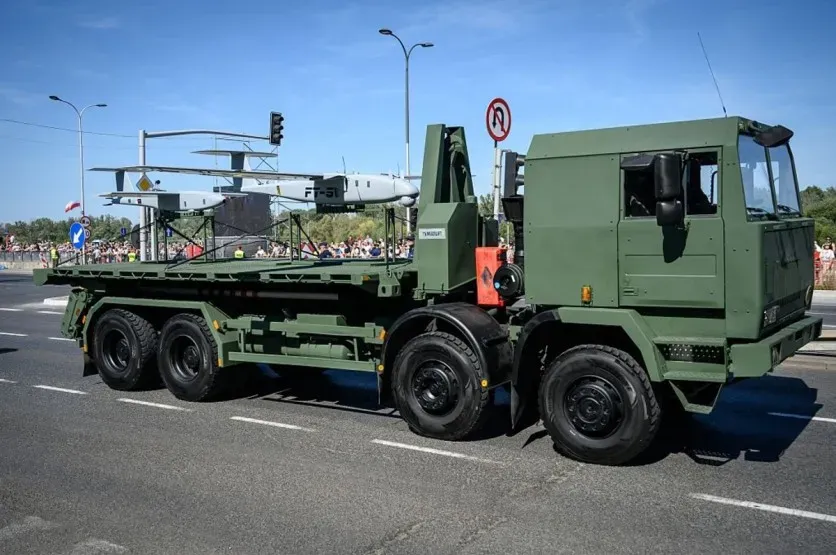
The milestone directly supports broader military requirements, including the SAN counter-UAS program, which integrates SA-35 self-propelled anti-aircraft guns mounted on Jelcz truck chassis. With a ready magazine capacity of 200 rounds per gun, the reduction in ammunition consumption per intercept increases the number of engagement cycles possible before reloading is necessary.
Following the completion of research-phase trials, the program moves toward qualification testing and serial production led by Mesko. The technical results form a central part of the Polish Armaments Group showcase at the MSPO 2026 defense exhibition in Kielce, highlighting domestic capabilities in developing guided medium-caliber munitions for ground-based air defense and naval systems such as the OSU-35K.