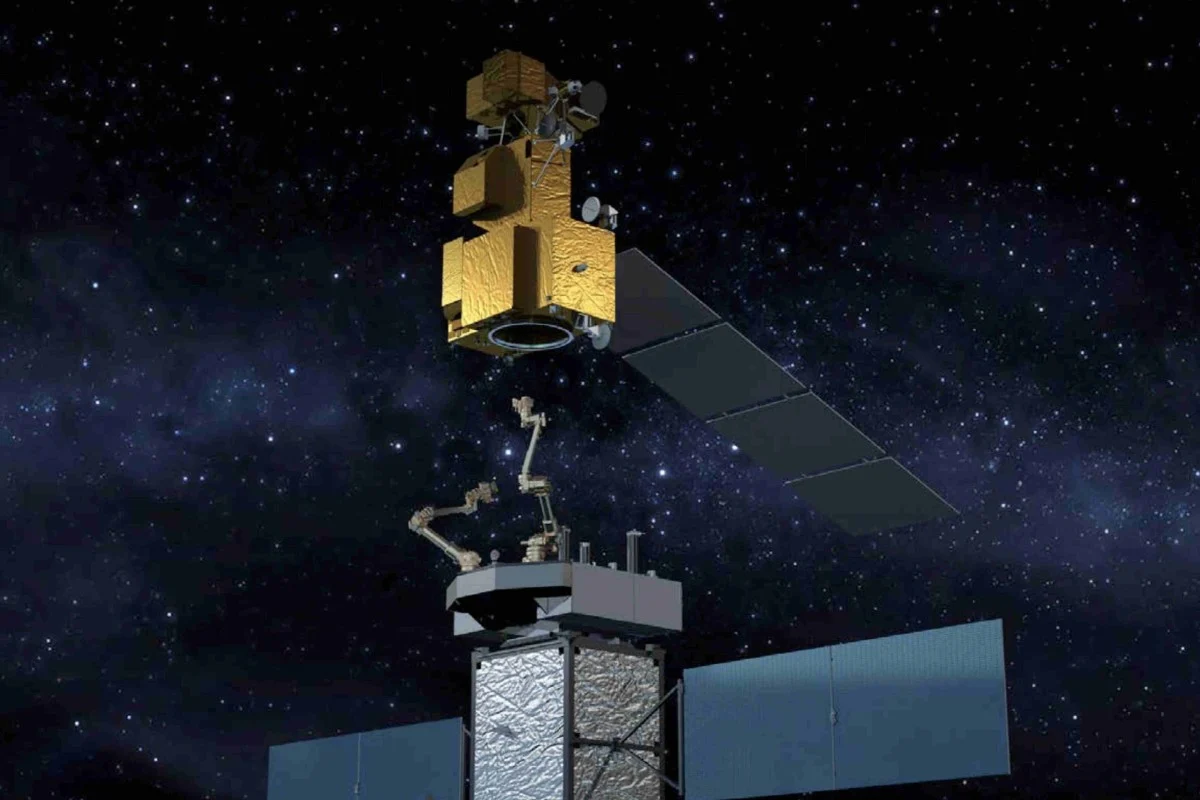
Chinese researchers have claimed that they successfully refuelled a BeiDou navigation satellite directly in high Earth orbit for the first time. According to their account, the operation took place in February 2025, although the claim has not been independently confirmed.
The operation is described in a research paper currently undergoing peer review for the Journal of Deep Space Exploration. Researchers from the state-funded Deep Space Exploration Laboratory said China had successfully transferred room-temperature propellant to a BeiDou satellite in high orbit.
A separate study by researchers from the Chinese Academy of Sciences provides more details. It states that the servicing satellite Shijian-25 transferred 142 kilograms of propellant to the BeiDou-2 G7 satellite in February 2025. According to the authors, this was intended to extend its operational life by eight years.
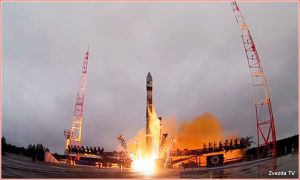
Shijian-25 was launched in January 2025. Its mission includes testing technologies for in-orbit refuelling, satellite repair and space debris removal.
However, the reported operation has raised questions. Orbital tracking data collected by the U.S. Space Force indicate that Shijian-25 and BeiDou-2 G7 did not come close enough to each other in February 2025 to dock.
According to the tracking data, BeiDou-2 G7 remained at approximately 110.5 degrees east longitude, while Shijian-25 was near 120 degrees east longitude after its launch. In June 2025, Shijian-25 moved to approximately 127 degrees east longitude.
Jonathan McDowell, a satellite-tracking expert and former Harvard astrophysicist, said the recorded orbits were inconsistent with the scenario of the satellites rendezvousing and conducting a refuelling operation in early 2025, according to the South China Morning Post.
The claim that BeiDou-2 G7 was refuelled therefore remains unconfirmed. At the same time, Chinese researchers have reported that the operation took place and highlighted the need for further development of technologies for transferring cryogenic propellants, which they say could offer better performance for large spacecraft and deep-space missions.