A Russian satellite designed to maneuver close to foreign spacecraft has fallen back to Earth, though tracking data raises questions about whether the object that reentered was the primary vehicle or a separated sub-satellite.
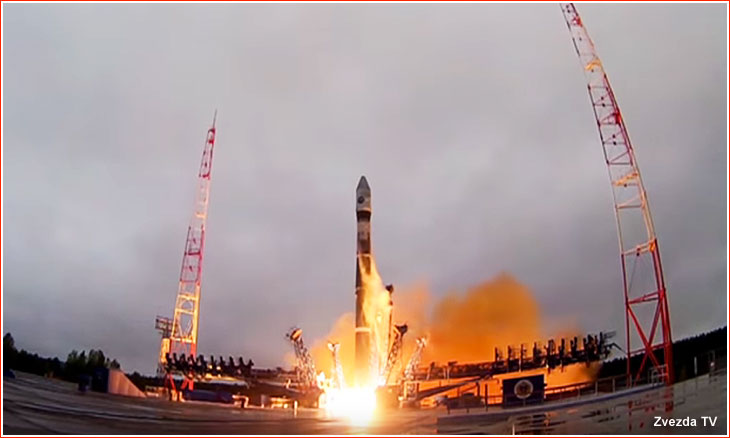
Launched in August 2022 from Plesetsk Cosmodrome aboard a Soyuz-2-1v rocket, Kosmos-2558 was part of the Nivelir program of co-orbital inspector systems and spent three years maintaining an orbital plane matching the classified United States National Reconnaissance Office satellite USA-326, approaching within approximately 31 kilometers in April 2023, reports The Defence Blog.
The spacecraft ceased routine orbit-maintenance burns around April 2025, leading to a natural orbital decay before a new object designated Object C was cataloged separating from the inactive satellite in June 2025.
Harvard-Smithsonian Center for Astrophysics astrophysicist Jonathan McDowell noted that Russia never registered an additional payload with the United Nations, leaving it unclear whether Object C functioned as a discarded module or a smaller sub-satellite.
While Russian authorities have not commented on the event, Nivelir-family platforms have previously drawn scrutiny from United States officials, including a 2020 incident involving Kosmos-2543 that United States Space Command characterized as a non-destructive test of a space-based anti-satellite weapon, whereas Moscow described the series as inspection systems designed to monitor the condition of national spacecraft.