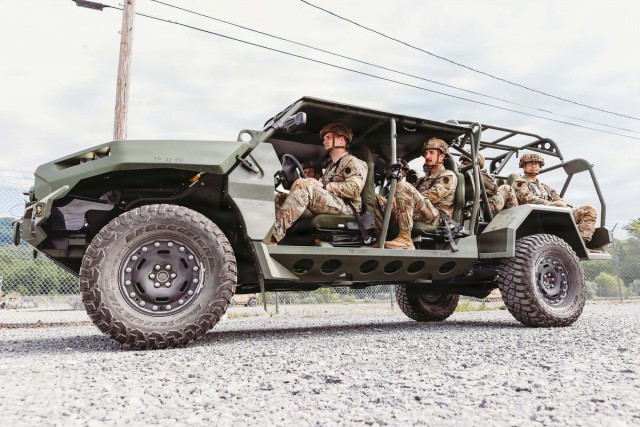
The US Army is expanding its Infantry Squad Vehicle (ISV) fleet target from 649 platforms to 11,582 units. The 18-fold increase reflects operational lessons from drone-saturated environments where rapid mobility and dispersion are essential to evade detection and precision strikes.
According to a US Army report published on August 19, 2026, the shift follows Transformation in Contact exercises where infantry units identified a requirement for lightweight transport to relocate before enemy reconnaissance-strike networks complete their targeting cycle. Built by GM Defense using commercial automotive technology, the ultralight ISV carries a nine-soldier squad. Transportable via UH-60 Black Hawk and CH-47 Chinook helicopters, it trades armor protection for air mobility, high cross-country speed, and reduced logistical overhead compared to heavier platforms like the JLTV or Humvee.
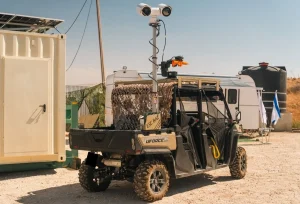
The program is evolving into a broader vehicle family. The ISV-Utility configuration substitutes passenger seating for additional cargo volume to support mortar teams and specialized payloads, while the six-seat ISV-Heavy variant incorporates increased electrical generation to enable command-on-the-move operations. Relocating tactical command functions onto mobile platforms aims to minimize visual and electromagnetic footprints associated with stationary command posts.
The primary engineering constraint remains controlling platform weight. Integrating additional communication suites, power units, and mission systems risks increasing vehicle mass, which could compromise helicopter sling-load compatibility and off-road maneuverability.