In January 2017, an explosive-laden boat raced toward a Saudi frigate patrolling off the coast of Yemen. It struck the Al Madinah’s hull, tore open a hole roughly five by six and a half feet, killed two sailors, and injured three more. Saudi and U.S. officials initially described it as a suicide attack — three Houthi fighters aboard small boats, one of which detonated against the ship. Weeks later, the U.S. Navy revised that account: the boat had no one aboard at all.
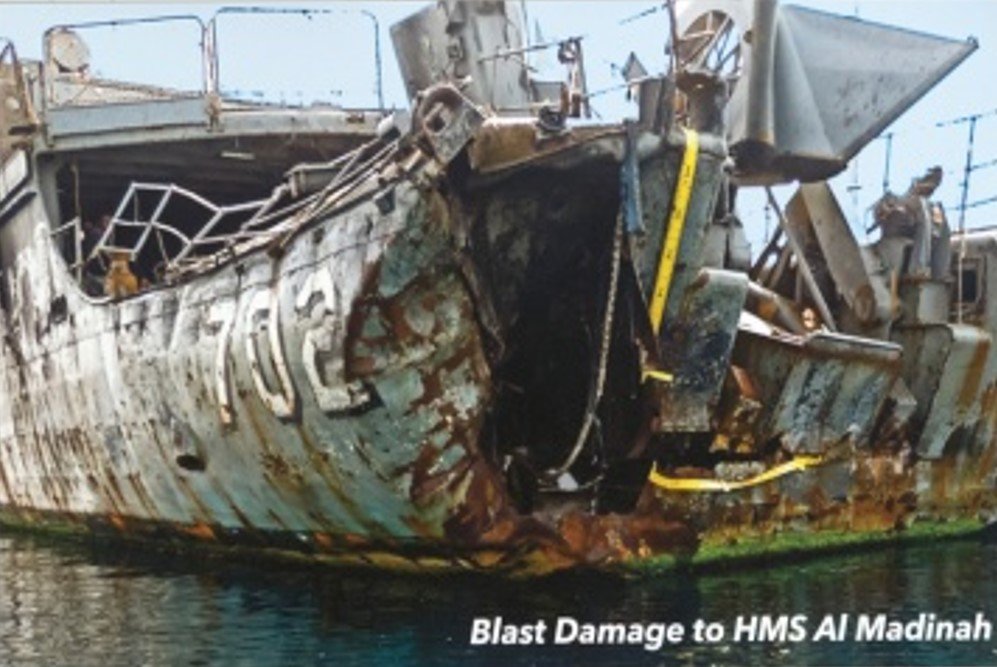
Extent of damage to Saudi frigate Al Madinah from Jan 30 Yemen Houthi attack
Iran’s unmanned prototype: the Shark-33
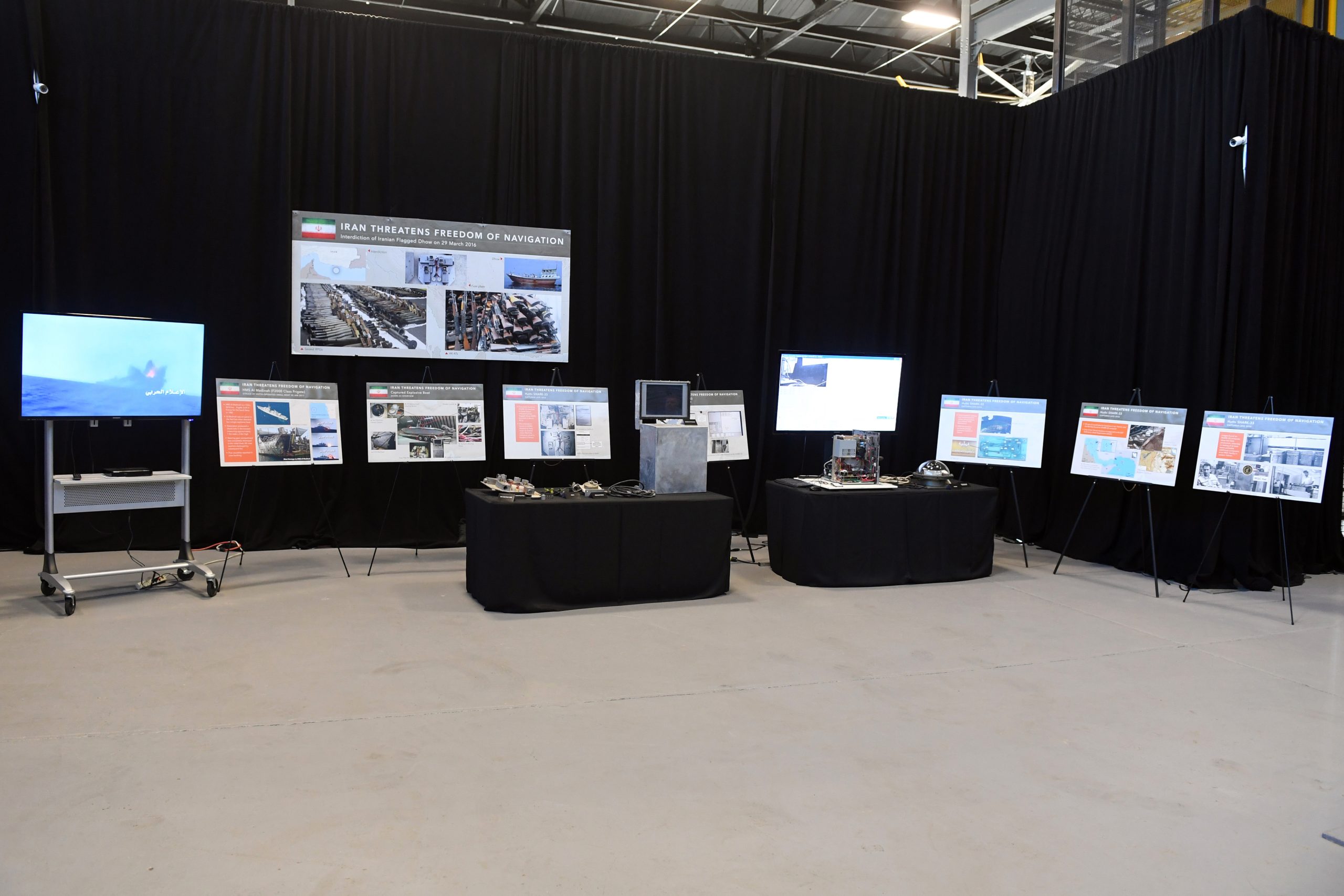
It was unmanned and guided in remotely — the first confirmed use of such a weapon by a non-state force, according to the U.S. Fifth Fleet’s commander at the time. In December 2017, the Pentagon put the boat’s own onboard computer and sensor package on public display in Washington, laying out physical evidence that traced the guidance hardware directly to Iran.
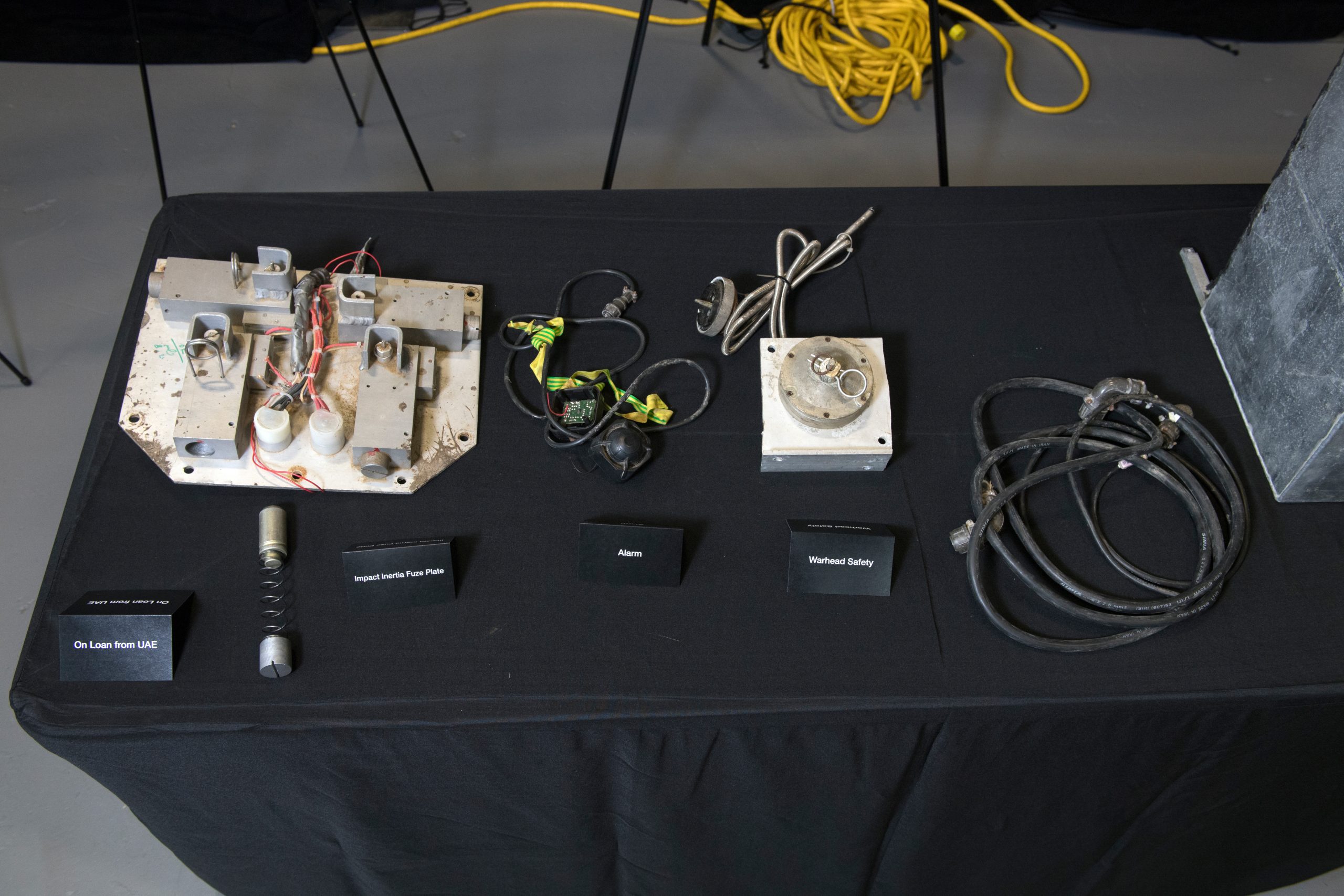
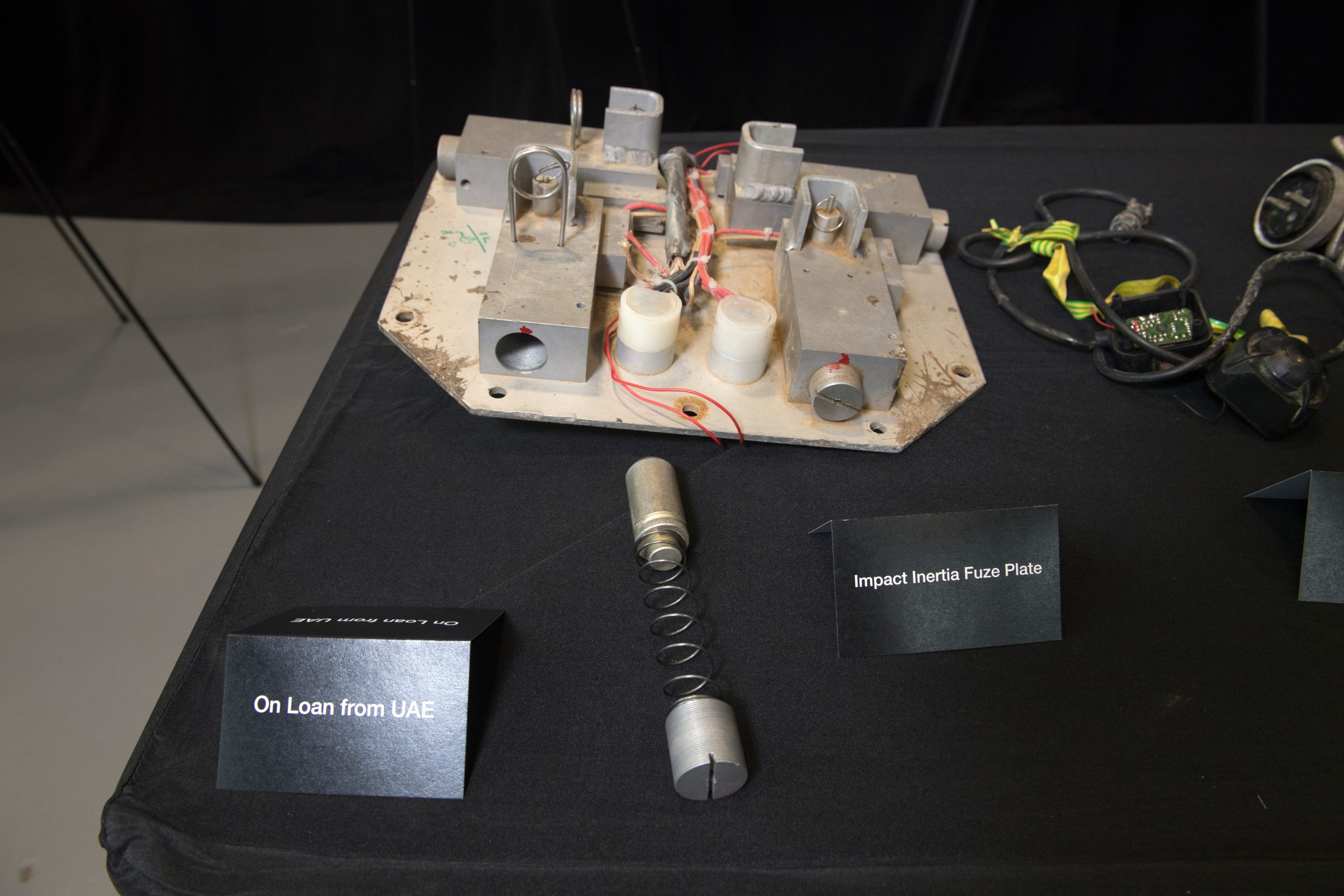
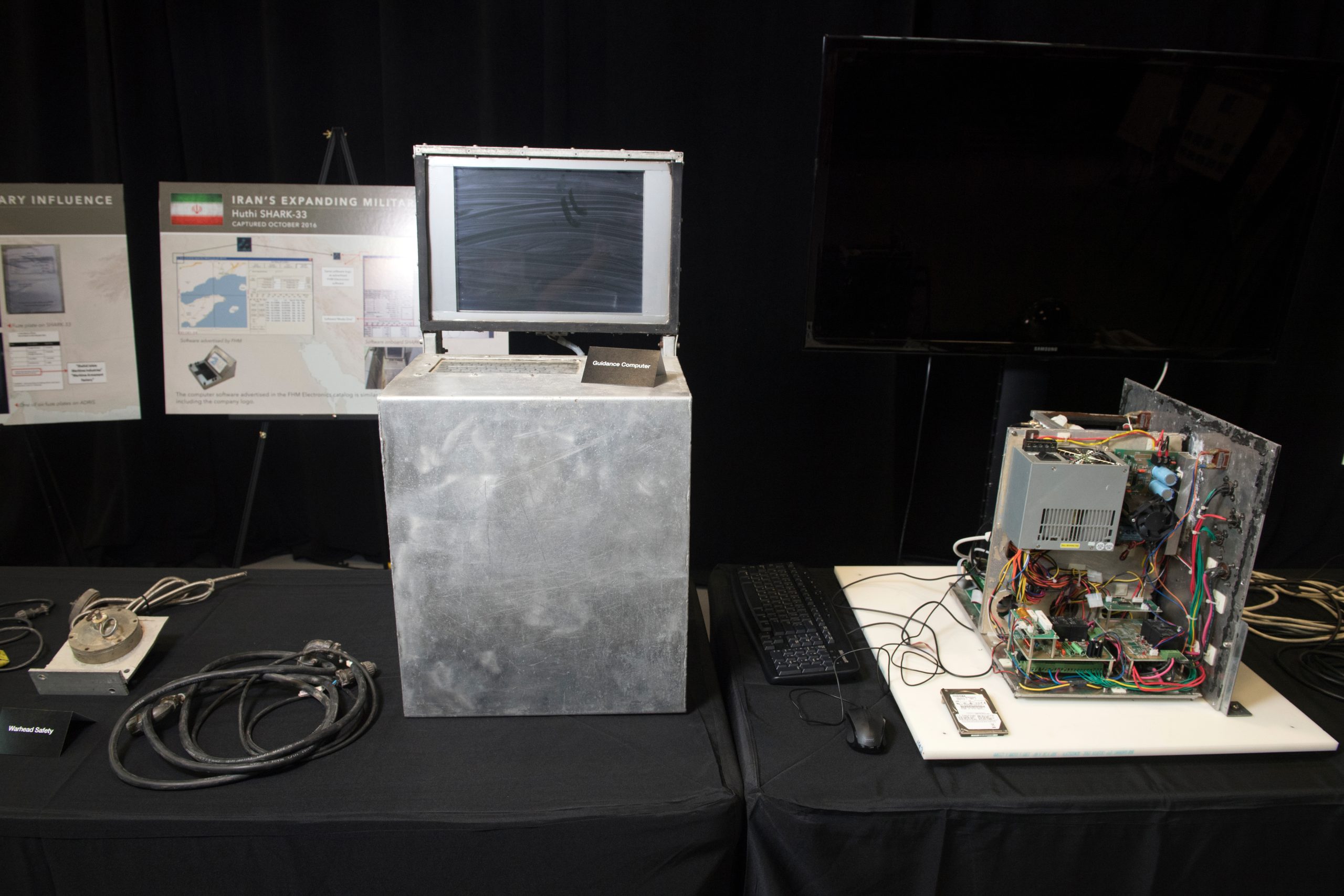
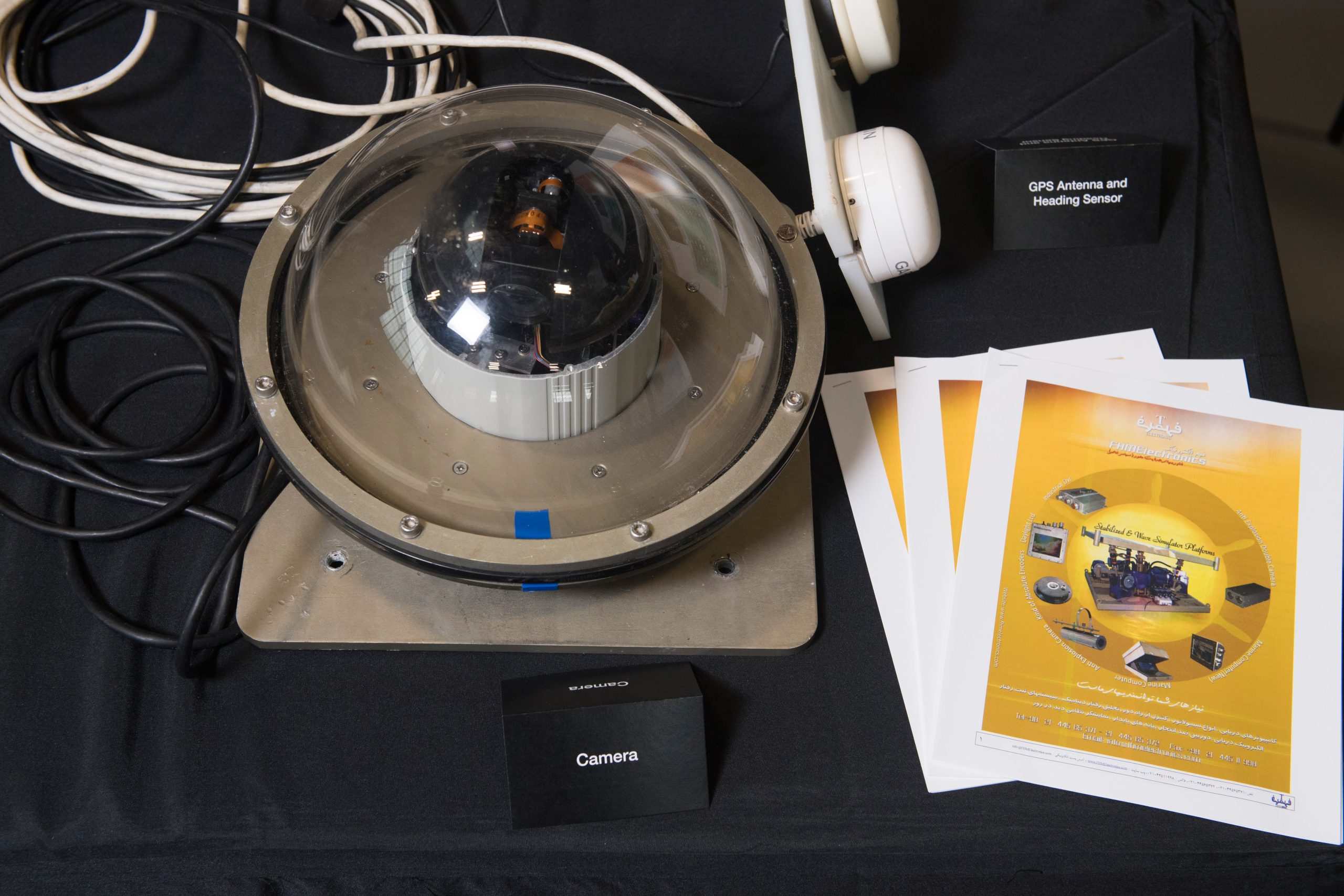
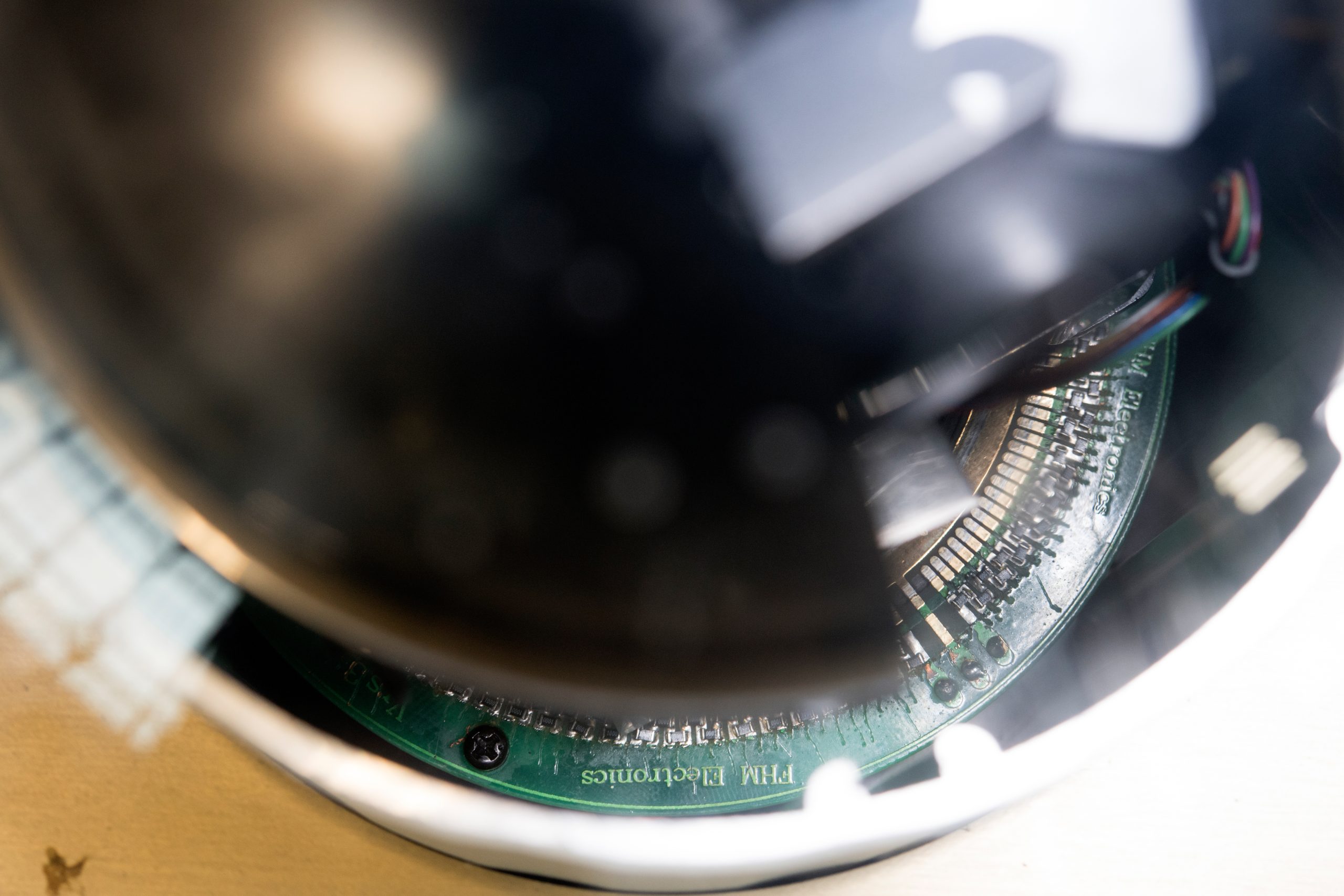
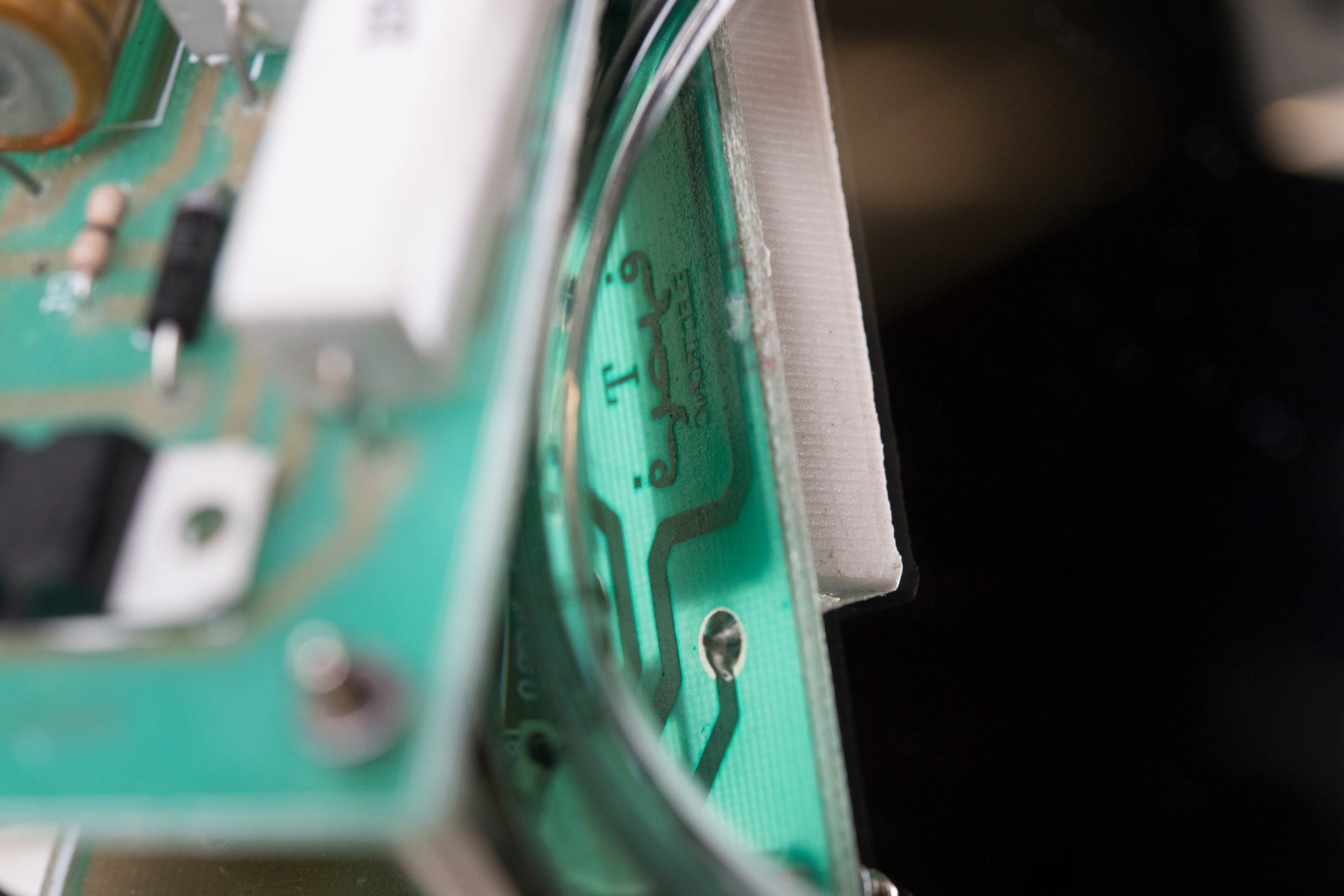
Unlike Ukraine’s later naval drone campaign, Iran’s unmanned boats never scaled into a sustained, high-tempo weapon. The Houthis kept fielding variants of the same basic design in the years that followed — intercepted or attempted strikes were reported in 2018, 2019, and 2020, including a hit on the Saudi auxiliary vessel Borida at Jeddah port in December 2020 — but each incident stayed sporadic and largely defensive in character, aimed at harassment rather than sustained naval denial. It would take a different war, fought by a state actor with far greater industrial capacity, to turn the same basic concept into a systematic campaign.
Ukraine’s improvised fleet rewrites the rules
The story of the modern naval drone effectively starts in a Ukrainian workshop in May 2022. Four engineers were given a blunt mandate by the Security Service of Ukraine: do something about the enemy fleet. What they built was the Magura V1 — a six-meter fishing boat hull with the profile cut down and an outboard motor bolted to the stern. It wasn’t armed. It was barely a warship at all. It was a proof of concept, made urgent by the fact that Ukraine had lost or lost access to most of its own navy.
The pace of iteration that followed was extraordinary by any military-industrial standard. The V1 gave way within weeks to the V2, which swapped the outboard motor for a jet-ski drive in a lower, canoe-like hull. By October 2022, the team had a version — later cataloged as V3 — that could hide a roughly 150-kilogram warhead and, critically, could be built in dispersed clandestine workshops rather than a single factory. On October 29, 2022, a squadron of these boats raced into Sevastopol harbor and struck the heart of Russia’s Black Sea Fleet in occupied Crimea — the moment the rest of the world first grasped what small, disposable, uncrewed boats could do to a conventional navy.
What followed was less a single weapon than an entire capability stack. Ukraine’s GUR (military intelligence) and SBU (security service) ran parallel drone-boat programs — Magura and Sea Baby, respectively — and both evolved rapidly from pure kamikaze platforms into multi-role vessels. By February 2024, a Magura V5 had sunk the Russian missile corvette Ivanovets, the first sinking of a warship by a naval drone in history; two weeks later, another sank the landing ship Tsezar Kunikov. Roughly a year later, modified Maguras carrying missiles shot down two Russian Mi-8 helicopters near Crimea — the first known destruction of a manned aircraft by a surface drone — and in May 2025, a Magura V7 fitted with AIM-9 Sidewinder missiles shot down a Russian Su-30 fighter jet, the first time in naval history an uncrewed surface vessel had downed a crewed combat aircraft.
The cumulative toll on Russia’s Black Sea Fleet is difficult to pin down precisely, but even conservative estimates run from 15 to more than 25 vessels sunk or damaged, with losses attributed to Magura alone estimated at roughly $500 million in the platform’s first year of public combat use. The practical consequence was strategic: Russia’s fleet abandoned its main base in Sevastopol for Novorossiysk, roughly 300 kilometers further from Ukrainian shores — a retreat that broke Russia’s de facto blockade and helped reopen Ukraine’s grain export corridor.
Three-plus years into the war, Ukraine no longer talks about individual drone boats so much as an uncrewed fleet with a genuine division of labor. The August 2026 Independence Day parade in Kyiv made that shift visible: alongside the combat-proven Magura V7 and Sea Baby, Ukraine displayed the new Magura MV11 — not built to ram a target, but to carry and launch a battery of interceptor drones for offshore air defense. What began as a surface-running torpedo with no other job now spans reconnaissance, minelaying, air defense, and strike — a full naval branch built from nothing in under four years.
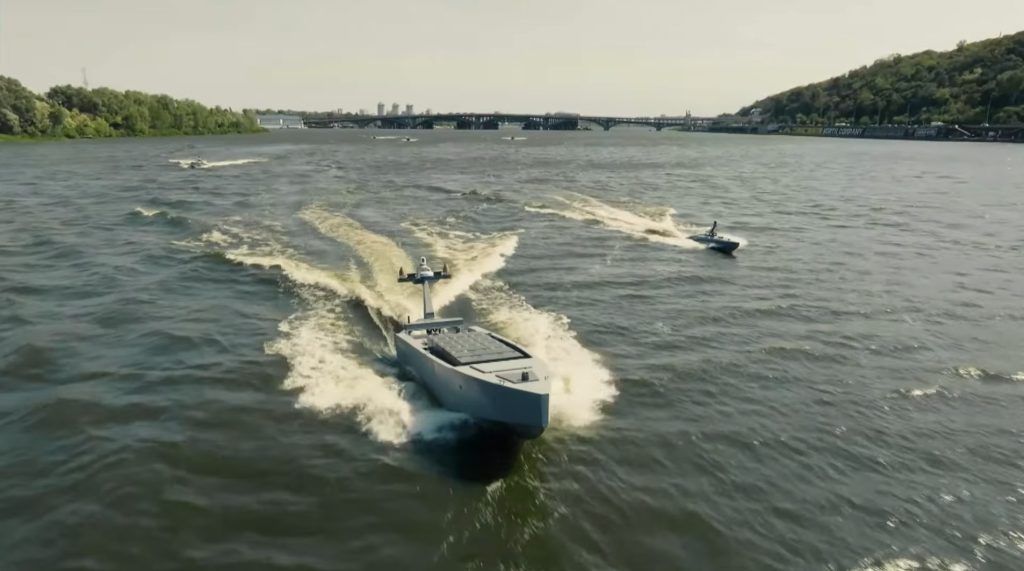
Maritime drone MV11 during the parade on Independence Day of Ukraine. August 24, 2026.
From experiment to doctrine: the U.S. Navy’s pivot
The U.S. Navy’s own path toward unmanned surface warfare predates Ukraine’s, but it moved at a distinctly institutional pace. In May 2022 — the same month Ukraine’s four engineers got their assignment — Commander, Naval Surface Force, U.S. Pacific Fleet stood up Unmanned Surface Vessel Division (USVDIV) One in San Diego, tasked with overseeing the medium-displacement Sea Hunter and its sister vessel Sea Hawk. Vice Adm. Roy Kitchener, presiding over the ceremony, called the division a catalyst for employing unmanned surface capabilities across the Pacific Fleet, framing the effort around increasing decision speed and lethality.
For years, that framing stayed largely experimental. What has visibly accelerated the U.S. program since is the direct, unmistakable influence of Ukraine’s Black Sea campaign. In April 2026, Green Berets from 1st Special Forces Group used remotely operated unmanned surface vessels to sink a target ship during Exercise Balikatan in the Philippines, in an operation the Pentagon designated Maritime Strike-North. The boats used in that strike bore a close resemblance to the Magura family — matching hull geometry, forward impact-fuse placement, and a shaped-charge warhead configuration consistent with documented Ukrainian designs, though UFORCE, which manufactures Magura today, disputed any authorized connection and said no third party is licensed to build the platform anywhere in the world. Whatever the exact lineage, the exercise marked the first known operational use of Ukrainian-style drone-boat tactics by U.S. forces in the Indo-Pacific — a region where deterring China, not Russia, is the underlying strategic driver.
That shift is now visible in acquisition, not just exercises. In June 2026, the Department of the Navy selected seven companies — Sea Machines, Leidos, Saronic Technologies, Galliano Marine Services, PacMar Technologies, Birdon, and Huntington Ingalls Industries — to advance to at-sea testing under its Medium Unmanned Surface Vessel (MUSV) marketplace initiative, with companies that pass testing earning $15 million and a path to production contracts. The Navy has described the program’s goal as accelerating unmanned maritime capability by leaning on mature commercial technology, while deliberately opening the door to smaller, non-traditional shipyards. Naval officials have projected that unmanned surface vessels could make up close to half the fleet by 2045 — a target that, five years ago, would have sounded like science fiction inside the Pentagon.
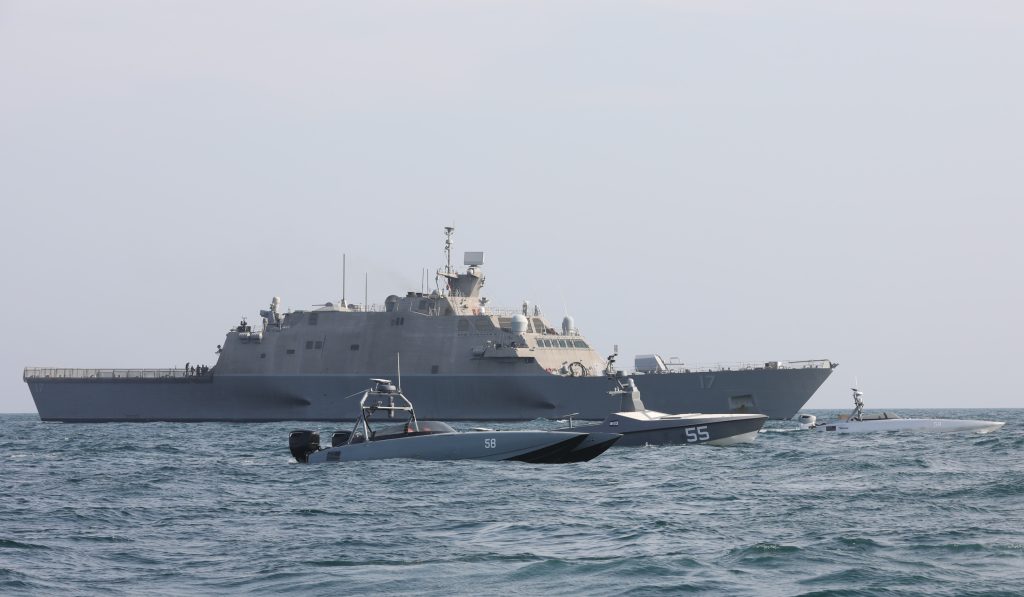
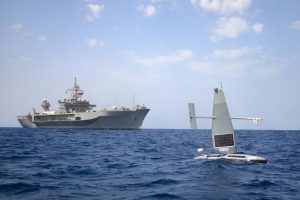
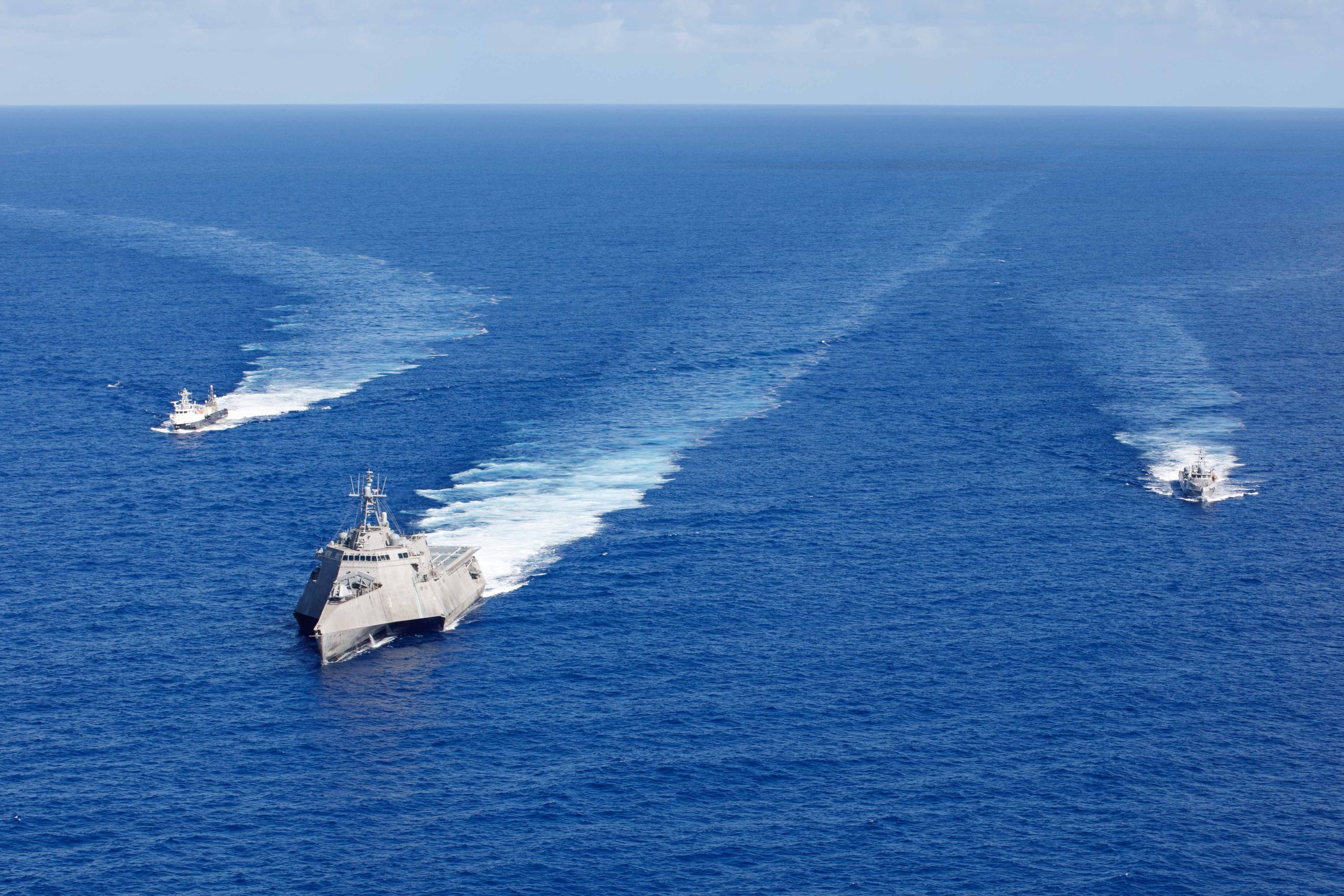
USS Indianapolis (LCS 17) sails with two T-38 Devil Ray USVs and an Arabian Fox MAST-13 USV
The Kremlin’s scattered pursuit
Russia entered this contest from an unusual position: it was the target of the first large-scale naval drone campaign in history, and its own uncrewed-boat programs have visibly scrambled to respond. In August 2026, Ukraine’s military intelligence (GUR) published a detailed catalogue of Russian USV projects, tracing designs back to “Skanda,” a speedboat-based platform first tested on Lake Ladoga in 2014 and later trialed in occupied Sevastopol in 2019 — years before the war that would make naval drones a household term.
The GUR’s overview lists more than a dozen active or experimental Russian platforms, spanning a wide range of roles: hydrographic survey boats like Iskatel and Farvater, patrol and mine-hunting craft like Trezubets, and a growing cluster of vessels explicitly built for combat, including Vizir-700 (pitched as both a kamikaze strike boat and a “hunter” of enemy naval drones), the Zefir/Orkan multi-role system, and Katran — a platform delivered to Black Sea Fleet units in March 2025 that Russian developers claim can be scaled into a dedicated drone carrier capable of hauling dozens of FPV drones 100 to 200 kilometers. GUR also flagged more improvised designs, including a wooden kamikaze boat coated in epoxy and fiberglass that Ukrainian intelligence believes may have been used in an attack on a bridge in Odesa region.
The breadth of the list is telling. Much of Russia’s naval drone effort still looks scattered rather than centrally coordinated — spread across research institutes, naval academies, and private contractors, with no small set of combat-proven designs the way Ukraine has with Magura and Sea Baby. Russia announced plans in 2025 to form dedicated unmanned-systems regiments across all of its fleets — a structural step Ukraine had already taken with its own USV brigade back in August 2023.
Taiwan bets everything on the same lesson
If Ukraine supplied the proof of concept, Taiwan may be the country applying it most aggressively at scale, driven by the same asymmetric logic: a numerically inferior navy facing a much larger adversary across a contested strait. Taiwan’s Ministry of National Defense has proposed a special budget of roughly $39.8 billion that includes production of up to 1,600 unmanned attack surface vessels, with the island’s state-run National Chung-Shan Institute of Science and Technology (NCSIST) expected to serve as prime contractor, drawing on a cooperation agreement with U.S. USV manufacturer MARTAC. A separate, more recent defense budget proposal adds up to 1,320 additional unmanned surface vessels alongside more than 200,000 one-way attack drones and nearly 1,500 reconnaissance drones, described by Taiwanese officials as building an “unmanned shield.”
Taiwanese shipbuilder CSBC has already launched a domestically built demonstrator, the Endeavour Manta — an 8.6-meter, five-ton trimaran capable of carrying high-explosive warheads and light torpedoes for direct ramming strikes, its hull shape chosen specifically to handle the rough currents of the Taiwan Strait. Taiwanese officials have been explicit that the design philosophy borrows directly from Ukraine’s playbook in the Black Sea: cheap, numerous, uncrewed platforms designed to offset China’s overwhelming advantage in conventional naval tonnage.
China, for its part, is treating the threat as credible enough to train against directly. In August 2026, Chinese ground forces conducted exercises using armed drones to intercept fast-moving drone boats — training that Chinese and Western analysts alike read as preparation for exactly the kind of USV threat Taiwan, the U.S., and other countries along the first island chain are now building. Beijing is also pursuing offensive naval drone capability of its own, including a swarm of unmanned surface vessels demonstrated off Zhuhai in March 2026 that autonomously patrolled, detected, and cordoned off a simulated intruder under centralized command — evidence that China is racing to master both sides of the same technology.
From improvised weapon to naval doctrine
What connects a wooden boat built by four engineers in a Ukrainian workshop, a Pentagon exhibit of an Iranian guidance computer, and a $40 billion Taiwanese shipbuilding program is a single, now widely shared conclusion: a small, disposable, uncrewed boat can threaten — and in Ukraine’s case, has already sunk or damaged — vessels many times its size and cost. What started as a guerrilla tactic against a blockading force in Yemen, and an improvised answer to a lost navy in Ukraine, has become a core pillar of naval planning from San Diego to Taipei. The boats themselves have grown up too — from single-use kamikaze hulls into multi-role platforms carrying machine guns, air-defense missiles, and swarms of their own drones. The niche tactic is now, unmistakably, the strategy.
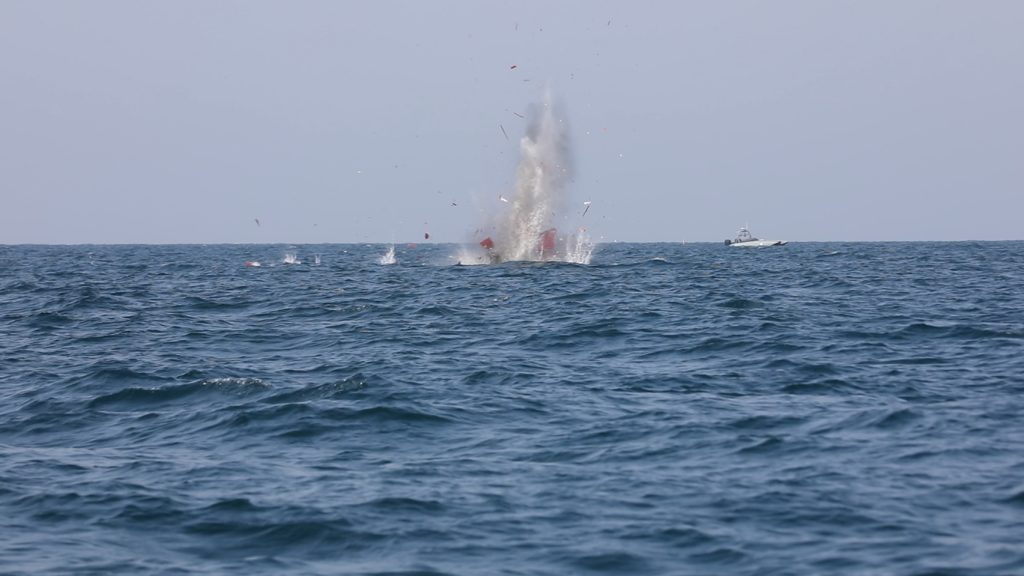
Munitions launched from a T-38 Devil Ray destroy a training target in the Arabian Gulf.