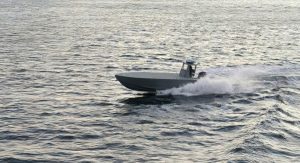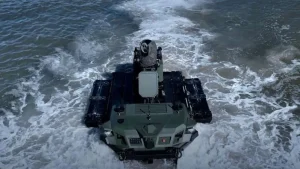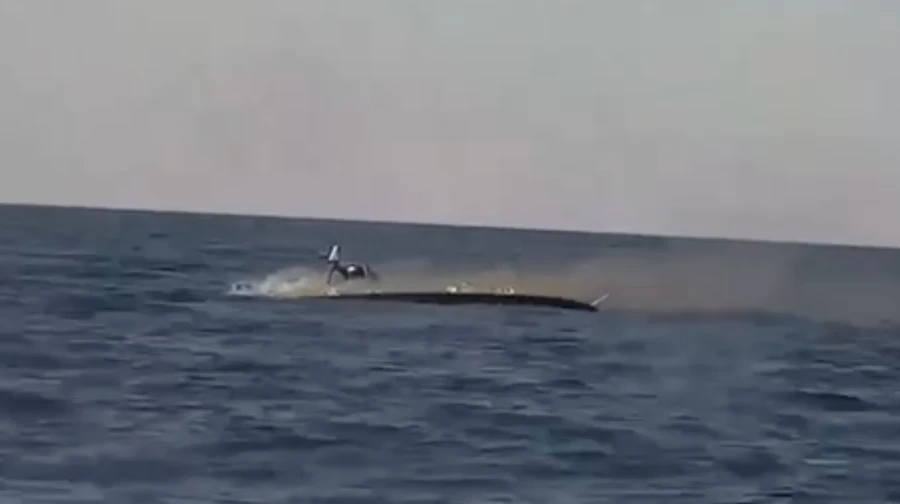
The Ukrainian Navy announced that an armed Sargan 3000 unmanned surface vessel destroyed a Russian unmanned boat in the Black Sea, in what Kyiv describes as the first naval engagement between opposing USVs. The clash signals a shift in maritime drone warfare, moving naval drones beyond reconnaissance and one-way explosive missions toward active counter-USV operations.
According to the Ukrainian Navy, units of Ukraine’s Defense Intelligence Directorate (HUR) first detected the Russian unmanned boat before the Sargan 3000 engaged the target. The operation utilized a 12.7 mm Protector remote weapon station mounted on the Ukrainian USV. Released video footage shows the system firing bursts toward the opposing craft until it was destroyed, though precise coordinates and engagement ranges were not disclosed.
This combat deployment highlights a technical transition in maritime warfare. Engaging a moving target from a moving hull under rolling sea conditions presents a complex fire-control problem, one that requires stabilized electro-optical sensors, low-latency communications, and precise weapon stabilization — a more demanding standard than the terminal collision or explosive self-destruction earlier naval drones relied on.
By employing a reusable platform equipped with a remote weapon station, naval forces can conduct multiple patrols and interception missions while keeping crewed vessels and personnel farther from active threats. The integration of external reconnaissance units, such as HUR, with armed USV platforms points toward a functional network for distributed maritime defense.