Two satellites from Russia’s second Rassvet launch batch are heading toward atmospheric reentry after failing to perform orbit-raising maneuvers.
The pair of spacecraft dropped below an altitude of 300 kilometres by late August, marking the latest setback for Bureau 1440, a Russian enterprise developing a low Earth orbit broadband constellation promoted as a domestic counterpart to Starlink, as reported in Anatoly Zak’s report on the RussianSpaceWeb.com portal. This follows the loss of the program’s first casualty, designated Object 4, which reentered the atmosphere on June 6 after failing to execute maneuvers following its March 23 launch.
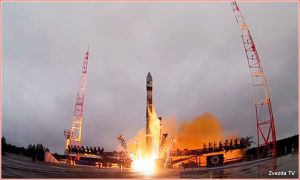
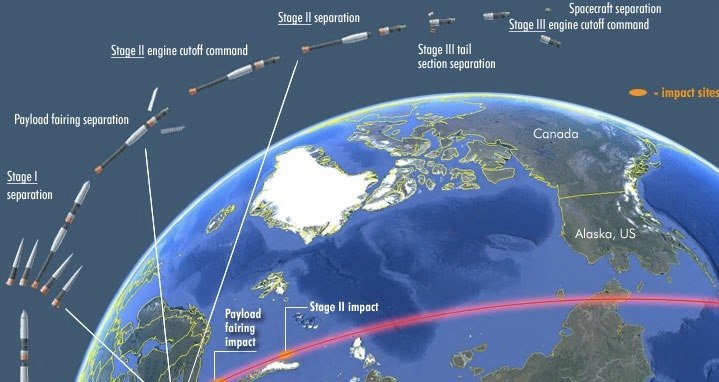
The affected satellites belong to a 16-spacecraft cluster lifted July 19 from the Plesetsk spaceport aboard a Soyuz-2-1b rocket. While U.S. Space Force tracking catalogued 17 objects in an orbit averaging 289 by 327 kilometres, tracking data indicated that three of the satellites that initially began climbing had stopped and entered a slow orbital decay at altitudes between 310 and 330 kilometres by the end of August. None of the spacecraft in the batch managed to ascend above 360 kilometres.
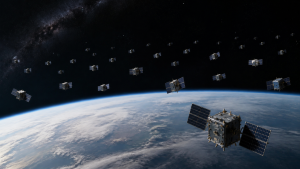
Bureau 1440 confirmed the July 19 launch’s initial success via Telegram, stating that the satellites separated from the vehicle and established contact with mission control. However, neither Roscosmos nor the Russian Ministry of Defense has issued public statements regarding the underperforming hardware. Rassvet aims to establish an independent satellite broadband network comprising roughly 250 satellites by 2027 and up to 900 by 2035, though analysts note the constellation requires at least 200 operational units to achieve stable, continuous coverage.