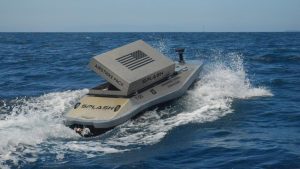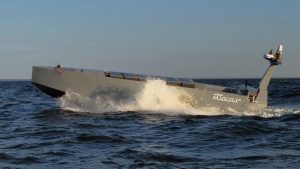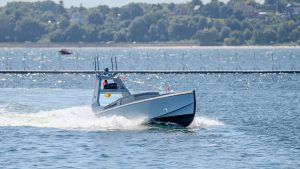
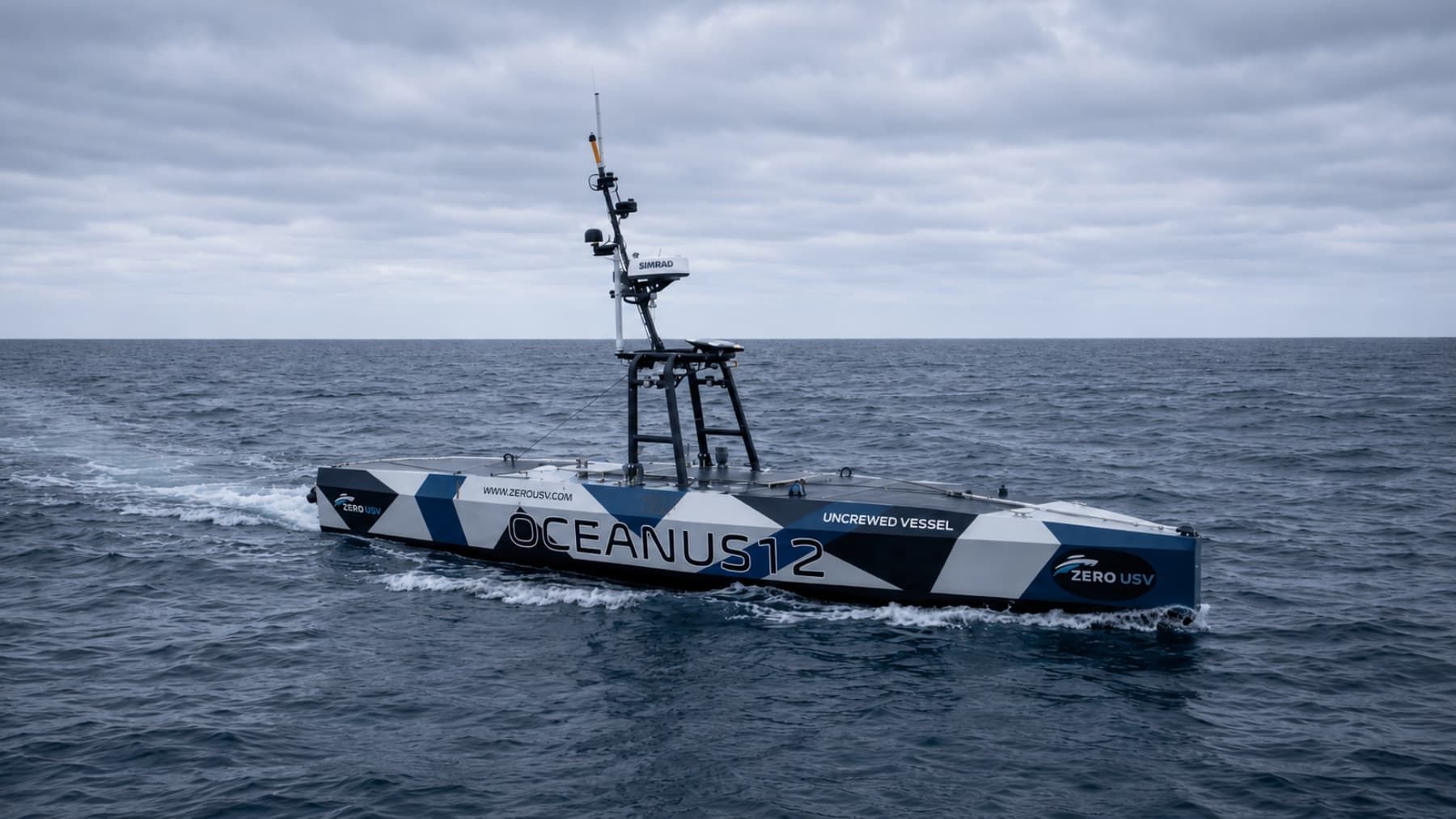
British maritime technology supplier ZeroUSV has completed a demonstration using its Oceanus12 autonomous surface vessel to deploy two smaller uncrewed surface vessels in a coordinated mission.
The trial took place in Plymouth, where UK Defence Innovation evaluated the payload flexibility of the 12-metre hybrid-powered autonomous boat, which hosted two C-Star vessels built by partner company Oshen, as reported by Naval Technology. ZeroUSV utilizes MarineAI’s Guardian autonomy suite on the Oceanus12 to provide navigational software capable of planning, coordinating, and executing tactical missions with minimal operator input.
Current UK trials involving the Oceanus class focus on launch and recovery operations, with the next phase of the programme set to deploy four C-Star vessels simultaneously. C-Star platforms are expendable systems designed to establish a sub-surface sensing layer at sea. Additionally, the Oceanus12 is scheduled for testing regarding the remote launch and recovery of an uncrewed underwater vehicle.
ZeroUSV managing director Matthew Ratsey emphasized the operational role the mothership maintains after deployment, noting that “Oceanus12 enables operators to deploy autonomous assets where they are needed, while also providing greater confidence in their location, status and performance in situations where traditional communications may not be available”. This capability positions the vessel as an active participant in autonomous mission execution rather than solely a launch platform.
The Oceanus12 features a payload capacity of 1,000 kilograms within a 4.0 by 2.2-metre space, a sprint speed of 12 knots, and a range of up to 3,600 nautical miles at six knots. While these specifications tend to restrict the mothership to exclusive economic zones, ZeroUSV also produces larger variants such as the Oceanus17, which accommodates a 4,000-kilogram payload and an operational range exceeding 5,000 nautical miles under exploratory contract evaluations for the Royal Navy.